Grace’s Story: Healing and Hope After Surgery for a Congenital Heart Defect
- Category: Cardiology, Patient Stories
- Posted on:

When Lauren Lavergne found out she was pregnant with her third child, Grace, she was admittedly a little nervous about the idea of having another little one. Living in Jennings, Louisiana with her partner, Chaisson, and their two children, Amelia and Carter, she already had her hands full.
By the time she reached 18 weeks, her world changed again. Routine genetic testing revealed a potential diagnosis that no expectant parent ever wants to hear: Trisomy 13, also known as Patau syndrome. It is a rare condition, occurring in an estimated 1 in 10,000 to 20,000 live births. Doctors warned that the condition could lead to devastating birth defects—or worse.
“It was a lot to take in,” Lauren said. “They told us babies with Trisomy 13 could be born with no brain or organs on the outside. We were hoping for the best but just trying to prepare for the worst.”
At 30 weeks, another scan revealed that Grace had a ventricular septal defect (VSD), a hole in the wall (septum) that separates the heart’s two lower chambers, allowing blood to flow between them. Congenital heart defects are the most common birth defects, affecting nearly 1% of all births in the United States—about 40,000 babies each year.
Lauren’s emotions were mixed. She feared for her baby’s future but held onto a quiet hope that Grace’s story might mirror her own. “My mom went through it with me,” she said. “And mine ended up closing on its own.”
A Smooth Delivery and a Small Fighter
Grace was born at 38 weeks. Grace was tiny but stable, despite the heart defect. After three days, most of them spent monitoring mild jaundice, she was able to go home.
The next two months were filled with more appointments, including regular visits with her local doctors. At first, the news seemed hopeful.
“He said if she gained weight, the hole might close on its own,” Lauren explained.
However, as the weeks went on, Grace’s growth stalled. “She stayed at the same weight—9 pounds—for two months,” Lauren recalled. “I thought she was eating fine, but she wasn’t getting what she needed.”
Right Care at the Right Time
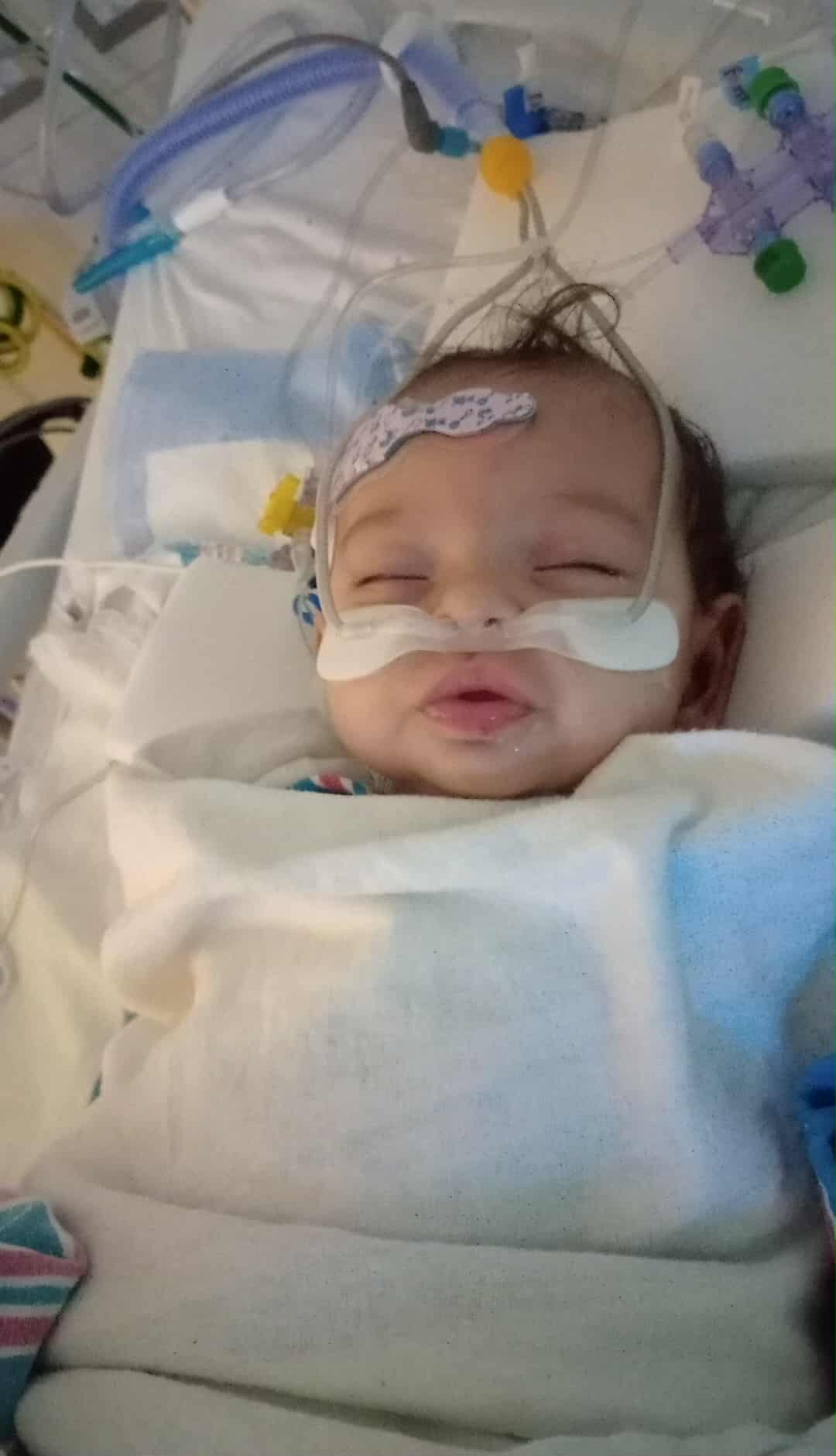 In September, when Grace was only 3 months old, she was admitted to Manning Family Children’s in New Orleans for further evaluation. There, Timothy Pettitt, MD, and the care team monitored her closely and inserted a feeding tube to help her gain strength before surgery.
When the decision came to move forward with heart surgery to repair her ventricular septal defect (VSD), Lauren remembered feeling a rush of fear and confusion.
“I was panicky,” she said quietly. “They explained that surgeons would need to open her chest to repair the hole in her heart. It was hard to comprehend.”
Dr. Pettitt performed the four-hour surgery a few weeks later. “They updated me throughout the procedure, when it started and when she was placed on bypass,” Lauren recalled. “Her father and I were thinking the worst.”
As it turned out, the hole in Grace’s heart was much larger than expected, about the size of a pinky. Thankfully, surgeons were able to repair it successfully.
Grace spent a week recovering in the hospital before going home. “She was doing well after surgery, but her heart kept going out of rhythm,” Lauren said. Grace began taking medication twice a day to help her heart beat steadily.
At her follow-up appointment with her local doctor on October 9, he shared encouraging news. Grace was healing well, and her medication dosage could be reduced. “He said she looked good and most likely wouldn’t need another surgery,” Lauren said. 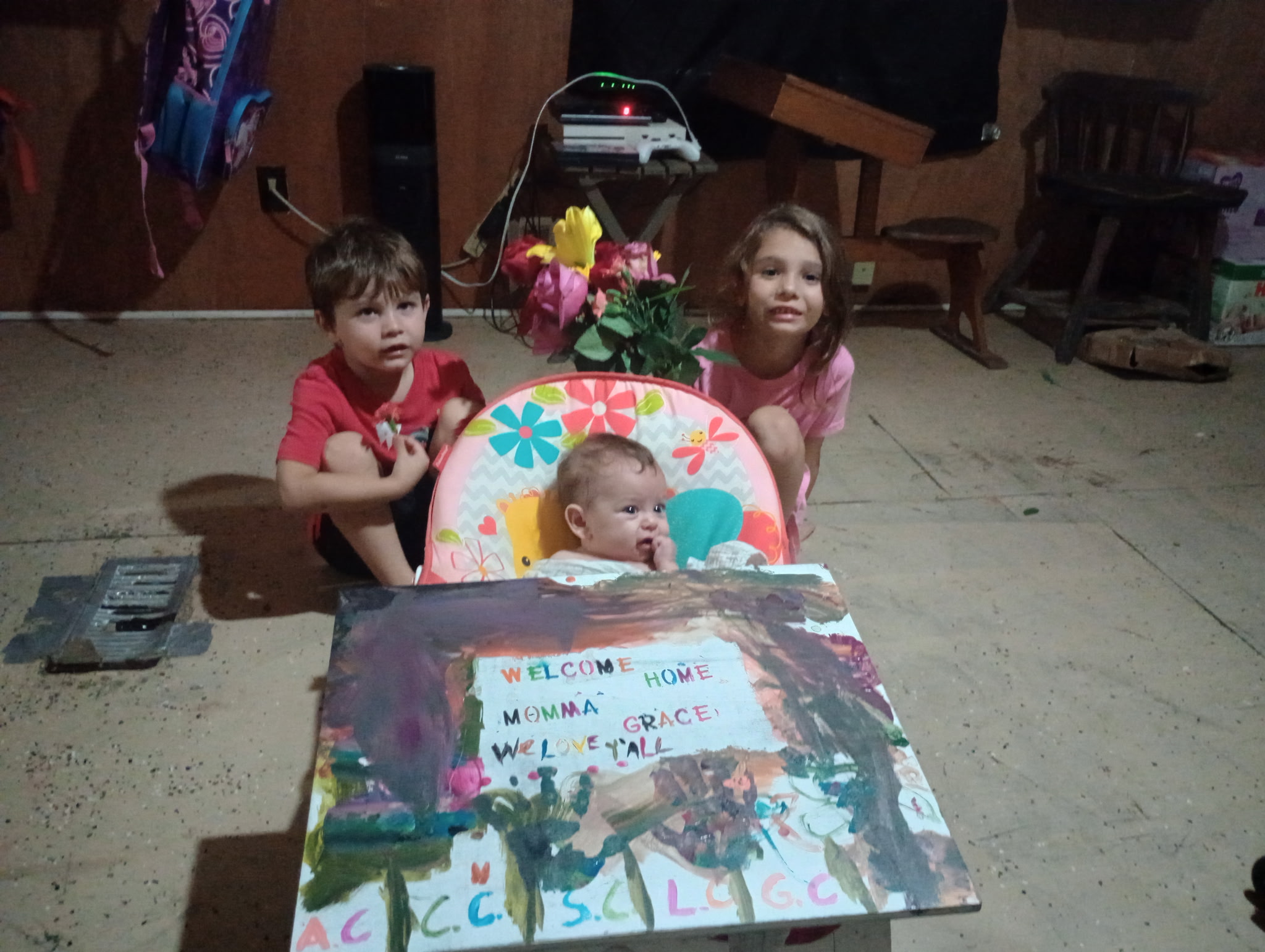
Grace is still on lifting restrictions and cannot do tummy time yet, but her recovery is right on track. “I told my other kids that something’s wrong with sissy and we’re going to fix it,” said Lauren. “I tried to explain it in a way my kids would understand, saying he’s just got a ‘boo-boo’ for now.”
Looking back, Lauren admits much of the experience still feels like a blur filled with fear, waiting, and uncertainty. But what stands out most is the care her family received at Manning Family Children’s.
“The nurses were so kind,” she said. “They helped calm my anxiety and made me feel supported when I didn’t know what was going to happen next.”
For Lauren and Chaisson, watching Grace heal has been a powerful reminder of both how fragile—and how strong—life can be. “She’s my little fighter,” Lauren said. “She’s been through more in four months than most people go through in a lifetime.”
At Manning Family Children’s, families like Lauren’s find hope, healing, and expert care close to home. To learn more about pediatric cardiology and other specialty services, visit Heart Center New Orleans | Manning Family Children’s.
**The images in this post are for artistic and marketing purposes only. Our precious babies in the NICU are on continuous cardio-respiratory monitoring. Parents and caregivers should always follow the AAP safe sleep guidelines. Under no circumstances should babies at home be placed prone to sleep, or have items such as toys, loose bedding, or blanket rolls in their cribs.
###
About Manning Family Children’s: Manning Family Children’s is a 263-bed, non-profit academic pediatric medical center that offers comprehensive healthcare services, including over 40 pediatric specialties, just for children. With more than 600 pediatric providers, Manning Family Children’s offers a comprehensive array of specialized pediatric services in Louisiana and the Gulf South. In addition to its main campus located in New Orleans, Children’s operates a network of specialty clinics across Louisiana, including in Covington, Baton Rouge, Alexandria, Lafayette, and the Mississippi Gulf Coast. Children’s offers primary care at 17 convenient locations, along with a network of statewide pediatric affiliations. Children’s is a proud member of LCMC Health, a Louisiana-based, not-for-profit hospital system which also includes New Orleans East Hospital, Touro, University Medical Center New Orleans, West Jefferson Medical Center, East Jefferson General Hospital, Lakeview Hospital, and Lakeside Hospital. Learn more at manningchildrens.org.


