How a rare limb-lengthening surgery at Manning Family Children’s helped Tegan stand taller and live more independently
- Category: Orthopedics
- Posted on:

Families often travel across the country seeking limb-lengthening surgery for children with achondroplasia, the most common form of dwarfism. For the first time in Louisiana, the expert orthopedic team at Manning Family Children’s is helping children and their families access this highly specialized care close to home.
For years, the Parkers searched for options that could improve their daughter Tegan’s mobility and help her gain independence. Their research revealed that only a handful of pediatric hospitals in the country offered the highly specialized limb-lengthening care Tegan needed.
Tegan has achondroplasia, the most common form of dwarfism. She is a “little person.”
The family traveled to Maryland from their home in Deridder, Louisiana, to meet with a renowned surgeon who specialized in limb-lengthening procedures for children with achondroplasia. However, their journey led them much closer to home — just four hours away — at Manning Family Children's, where orthopedic surgeon Jessica Rivera, MD, PhD, offers advanced limb-lengthening procedures for children with complex skeletal conditions.
Tegan, now 13, was diagnosed with achondroplasia after her adoptive parents, Julie and JD, noticed early developmental differences and sought specialized care.
When COVID halted their plans for Tegan to have surgery with the Baltimore surgeon who pioneered a revolutionary limb-lengthening procedure, their hopes were temporarily dashed.
That’s when Tegan’s orthopedist at Manning Family Children’s referred the family to one of his colleagues, Dr. Rivera, who specializes in complex limb reconstruction and limb-lengthening procedures. As it turns out, Dr. Rivera trained under the very surgeon in Baltimore who pioneered the revolutionary limb-lengthening technique the family had originally sought out-of-state — giving the Parkers confidence they could receive that same level of specialized care closer to home.
Understanding Achondroplasia and Tegan’s Early Journey
Julie and JD adopted Tegan as an infant after learning her biological mother, Julie’s goddaughter, was unable to care for her. They also later adopted Tegan’s younger sister, Audrey, now 10.
At first, the couple struggled to understand the medical challenges Tegan faced as a little person. They knew it was about more than height and that Tegan could have other health challenges as she aged.
“When we first brought her to the clinic, she was four months old and only 11 pounds,” Julie recalled. “We didn’t know where to start.”
Their search for answers eventually brought them to Manning Family Children’s, where geneticists began evaluating Tegan when she was a baby. Over time, Tegan’s diagnosis of achondroplasia was confirmed.
As mentioned, achondroplasia is the most common form of dwarfism, affecting about one in every 25,000 people. There are about 250,000 people living with achondroplasia in the world.
This is a rare genetic condition caused by a change in the body’s FGFR3 gene, which helps control how bones grow and develop. Children who have achondroplasia experience slow growth in their arms and legs, leading to shorter stature as well as differences in body proportions.
The condition can also impact the size of the person’s inner ear canals, which can lead to frequent ear infections; compression of the spinal cord, which might cause nerve issues; and narrowed upper airways, which can lead to life-threatening sleep apnea.
People with achondroplasia can live active, healthy lives as long as they are followed closely by a knowledgeable medical team. However, they look different from other children. They are referred to as “little people” because of their small stature.
Julie and JD wanted to make sure their daughter had the very best chance at a great life, despite her condition. They eagerly embraced the care provided by her multidisciplinary team at Manning Family Children’s that included endocrinologists, orthopedics and geneticists.
“We were so happy that we could get Tegan the best care in our own backyard,” said JD, a retired Louisiana state trooper.
For families facing achondroplasia and complex skeletal conditions, access to multidisciplinary pediatric specialists is critical. At Manning Family Children’s, Tegan’s care involved coordinated expertise across genetics, endocrinology, orthopedics and rehabilitation services — all working together to support her growth, mobility, and long-term quality of life.
Tegan’s parents vowed to do everything they could to help her stand tall, both physically and emotionally.
In fact, when her diagnosis made Tegan eligible to take an injectable medication, Voxzogo, proven to increase bone growth in children with achondroplasia, they immediately embraced the concept. Tegan started taking Voxzogo shortly after it was approved by the Food and Drug Administration in 2021. She will continue taking the daily shots until her growth plates close.
Finding Specialized Limb-Lengthening Care Close to Home
Tegan was carefully monitored as she celebrated birthdays, but as she got closer to “tweenhood” with middle school on the horizon, Julie, JD and Tegan decided it was time for her limb-lengthening surgery.
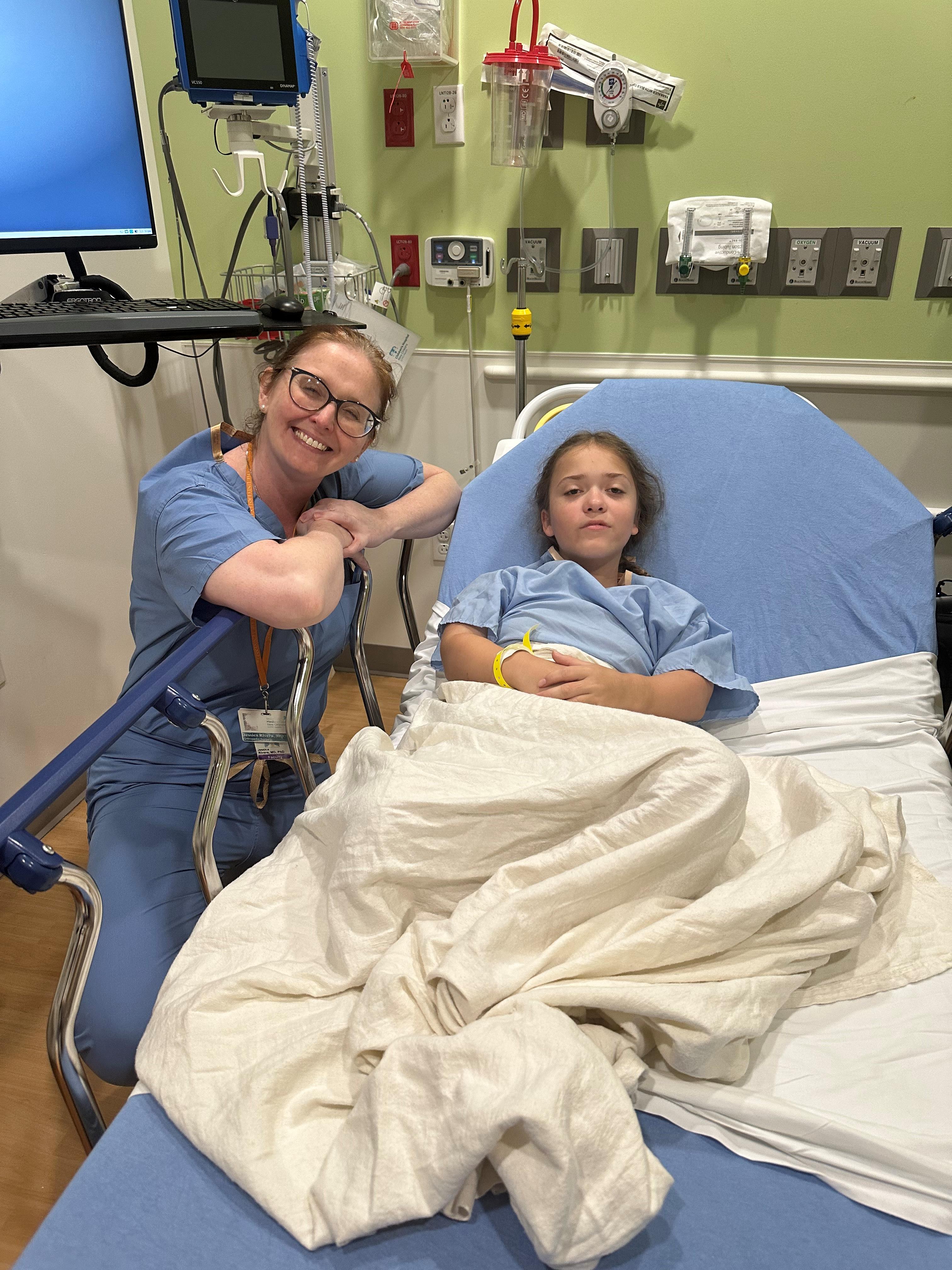 “Life isn’t easy for little people,” Julie said. “We wanted to do everything in our power to give Tegan the very best chance to succeed in life.”
As she entered adolescence, the physical and emotional challenges of dwarfism became more noticeable. “As she got older and others got taller, it affected how she interacted with people,” Julie said. “She started keeping her head down more.”
Functional stature-lengthening surgery is an advanced orthopedic procedure that gradually lengthens bones in the legs over time. The highly specialized surgery requires careful surgical planning, close monitoring, and months of rehabilitation to safely achieve new bone growth and improved function.
Limb-lengthening surgery for children with achondroplasia is considered one of the more complex areas of pediatric orthopedic reconstruction. The process requires extensive follow-up, imaging, rehabilitation, and family support throughout recovery.
A limited number of pediatric programs across the United States routinely perform this type of limb-lengthening surgery for children with achondroplasia. Families are often required to temporarily relocate for months at a time to remain close to their surgical team during recovery and rehabilitation.
Finding Dr. Rivera was a Godsend for the Parker family. “We immediately felt comfortable with Dr. Rivera when we met her,” JD said. “And Tegan really liked her, too. We felt very comfortable going ahead with the surgery.”
Dr. Rivera also understood something important to the family. They wanted Tegan to recover at home and complete her physical therapy locally.
“Dr. Rivera told us she knew patients are more comfortable at home,” Julie said. “She helped us find physical therapy close to where we live so we could continue care without relocating for months.”
Manning Family Children’s ability to coordinate highly specialized surgical care in New Orleans while allowing families to recover and complete portions of therapy closer to home can help reduce some of the emotional and logistical burdens often associated with prolonged out-of-state treatment.
Advanced Limb-Lengthening Surgery Transforms Tegan’s Life
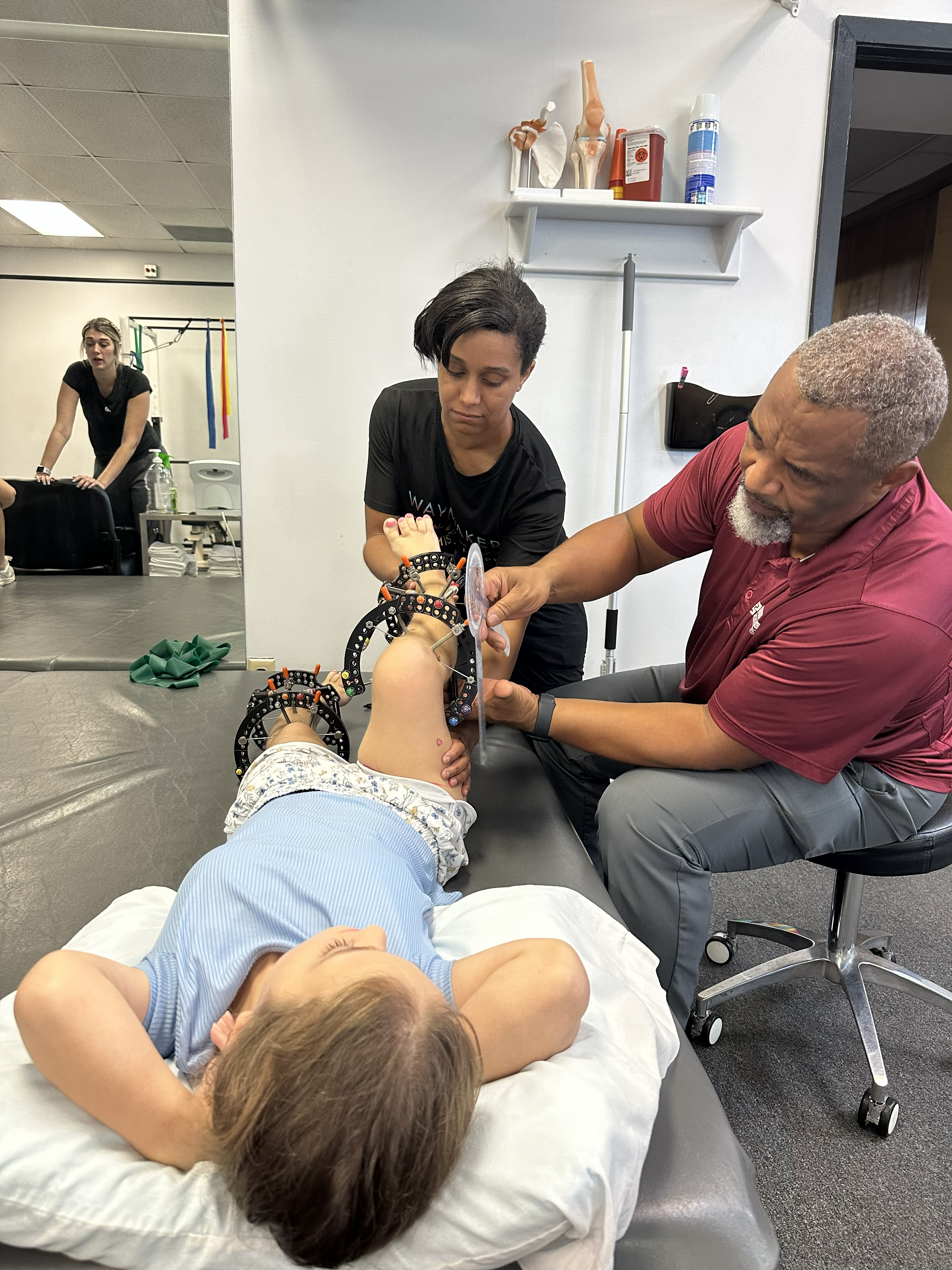 For the first time in Louisiana, in the summer of 2025, Dr. Rivera performed staged surgeries to lengthen both of Tegan’s legs using internal magnetic lengthening nails and external fixation devices known as fixators.
Dr. Rivera performed bilateral femur and bilateral tibial lengthening using advanced internal magnetic nail technology combined with external fixation devices — a complex staged process requiring months of close follow-up and careful adjustments.
“This is a tedious process with follow-ups every two to three weeks for several months,” Dr. Rivera said. “Tegan did awesome with her gradual lengthening course and achieved 5 centimeters in her femurs and 5.5 centimeters in her tibias.”
Before surgery, Tegan came up to Julie's waist standing straight at 45.25 inches. Now, Tegan can put her head on Julie’s shoulder. She stands at 52 inches — thanks to the limb-lengthening surgeries performed by Dr. Rivera.
More than anything else, this seventh grader carries herself with a new sense of confidence.
“It was worth everything,” Tegan said. “The world isn’t built for little people, and I used to not be able to see over the counter at the store and now I can.”
The result has turned out tremendously well, but the rehab was physically demanding and emotionally challenging not only for Tegan, but for her parents, as well. Tegan was not able to put weight on her legs at all for seven months.
“We had to learn how to transfer her from the bed to the wheelchair and how to care for her every day,” Julie said. “I was scared to move her because I didn’t want to hurt her. The whole thing felt daunting at first.”
Additionally, JD pointed out, the couple had to learn how to adjust the internal nails implanted in her upper legs with magnets and tighten the external devices on Tegan’s lower legs. For months, the family traveled regularly for follow-up appointments in New Orleans with Dr. Rivera, while also managing intensive physical therapy near their home. Throughout the process, the family said Dr. Rivera remained constantly available and deeply invested in Tegan’s recovery.
“She spent time with us and never made us feel rushed,” Julie said. “She would even meet us during her lunch if we needed something. She goes above and beyond.”
Tegan said she appreciated that Dr. Rivera always spoke directly to her during appointments.
“She always asked me how I felt about what we were doing,” Tegan said. “She talks directly to me and doesn’t pretend like I’m not here.”
Standing Tall: Tegan Gains Confidence, Independence, and Mobility
Tegan’s lower fixators were removed in December 2025, and the remaining internal medical devices were surgically removed in the spring of 2026.
 Today, Tegan continues physical therapy at home following guidelines set by Dr. Rivera, while also swimming to build strength and improve her gait. She recently surprised classmates by walking into a school ceremony to receive an honor roll award after spending much of the school year using a wheelchair. She completed seventh grade remotely but is eager to return to school full time for eighth grade.
“I wish everyone could see the look on her classmates’ faces when Tegan walked in,” JD said. “It was so great to see her reaction. The surgeries have transformed her in so many ways.”
Her family says the greatest transformation has not been physical. “Now she holds her head high,” Julie said. “You can see the difference in her confidence.”
For Dr. Rivera, the experience was equally meaningful.
“It has been an honor working with Tegan and her family to achieve their goals,” Dr. Rivera said. “It is very emotional hearing her mother express how wonderful it is to see Tegan interact with the world looking forward rather than from below.”
The Parkers hope sharing Tegan’s story helps other families understand that advanced pediatric orthopedic care and highly specialized limb-lengthening procedures may be available closer to home than they realize.
“We want people to know this surgery can be done while still allowing families to return home for therapy and recovery,” Julie said. “It’s been a full-time job, but it’s also been incredibly rewarding.”
For more information on advanced Orthopedic Care at Manning Family Children’s, click here.


