When every step hurt: How a Louisiana teenager found relief from hip dysplasia at Manning Family Children’s
- Category: Orthopedics, Patient Stories
- Posted on:

As a high school freshman, Erin Gee earned a spot on her high school tennis team. By August 2024, the Madisonville, Louisiana native was practicing constantly, determined to make the roster again as a sophomore.
Then one Sunday morning, everything changed. Erin woke up feeling unusually achy from Saturday’s tennis practice the night before—enough that she wondered if she’d pulled a muscle. She went to church with her mother, Lana, anyway. even though something felt off. As the church service was ending, Erin felt a sudden jolt of pain.
“My right hip locked up, and I couldn’t move. Out of nowhere, I felt a pounding pain,” she recalled. “It felt like a 50-pound weight slamming into me.”
Sitting, standing, or walking made the pain worse. What had started as an occasional twinge quickly became unbearable. Lana took her daughter to the local emergency room, but X-rays didn’t reveal a clear diagnosis. Erin was referred to a nearby orthopedist, and Lana booked the appointment.
Finding answers at Manning Family Children’s
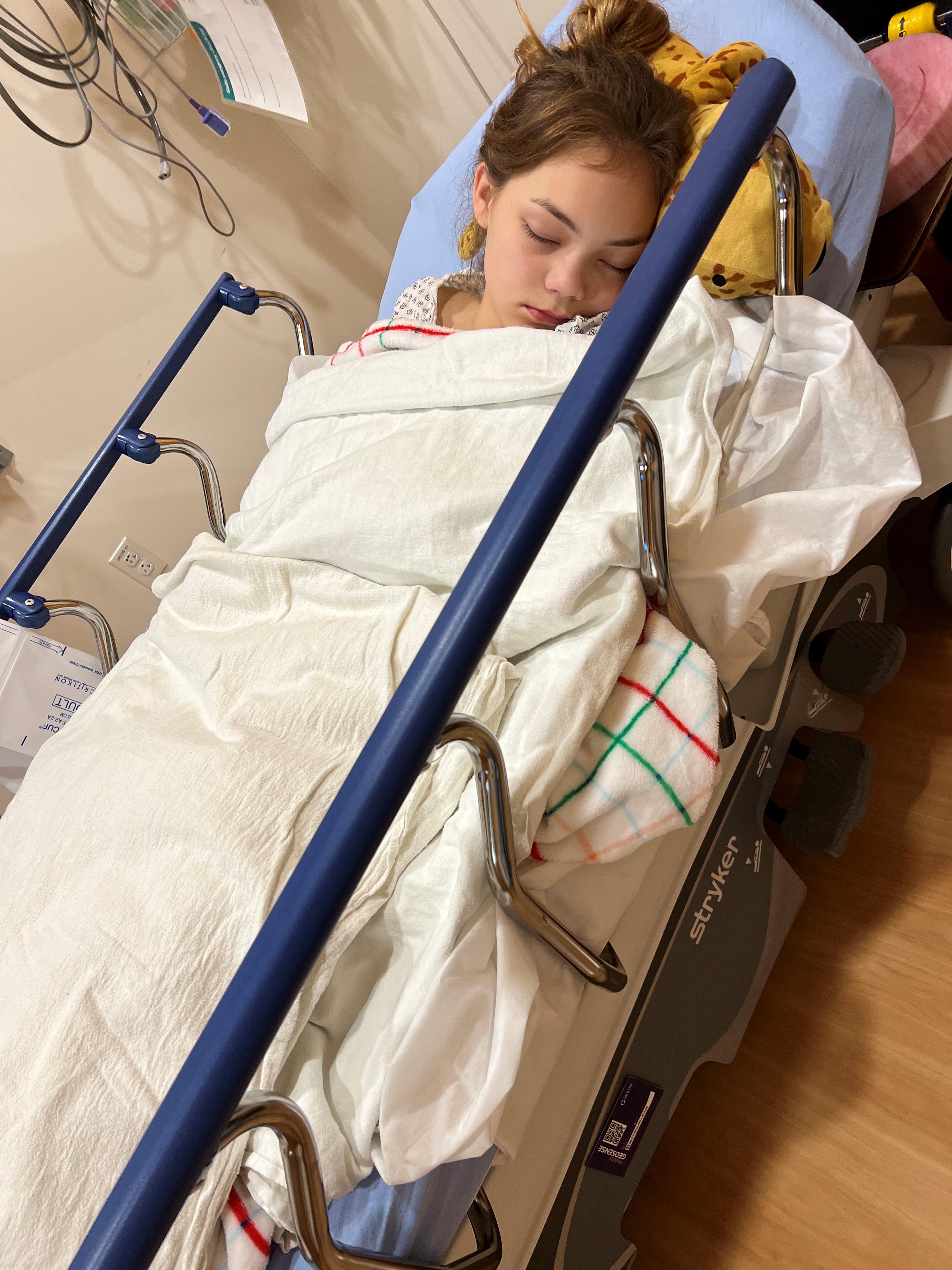
 Erin’s pain only increased, so Lana decided to take action. She took Erin to the emergency room at Manning Family Children’s in New Orleans, where doctors and orthopedic residents reviewed her X-rays and ordered additional imaging. From there, Erin was referred to one of our pediatric orthopedic surgeons.
At her first appointment, her surgeon quickly diagnosed and explained what was causing her pain: hip dysplasia. The condition develops when the ball at the top of the thigh bone doesn’t sit properly in the hip socket. Instead of being fully covered, the joint sits loose or shallow, leading to pain, popping sensations, and even partial dislocation over time. Left untreated, hip dysplasia can lead to arthritis or long-term joint damage.
Even with a serious diagnosis, Erin and Lana left the appointment reassured. What stood out to Lana was the care team’s calm, methodical approach.
“They explained everything clearly and didn’t jump right to surgery,” Lana said. “They wanted to give Erin’s body a chance to respond.”
Erin’s treatment started with 10 weeks of physical therapy (PT) close to home. Three times a week, Erin worked to strengthen the muscles that stabilize her right hip. The early sessions were hard.
“Those were muscles I hadn’t used,” Erin said. “But I was determined to stick with physical therapy. My doctor had a plan, and even though he said surgery might still be ahead, he always encouraged me to stay positive and keep getting stronger.”
After several weeks of outpatient PT, Erin felt ready to test her progress on the tennis court. The first practice went reasonably well, but the second told a different story.
“It felt like everything we’d fixed in physical therapy just fell apart,” she said. “I felt like I was right back at the beginning with that horrible pain.”
When the pain returned, her care plan evolved
Erin, now 16, returned to the Manning Family Children’s Orthopedics team in November 2024. They recommended an MRI and a cortisone injection, a treatment that reduces inflammation and can help confirm the source of the pain. The relief from the injection was real but temporary; within a few weeks, the pain was back.
Lana clearly remembers the moment they realized surgery was the best path forward.
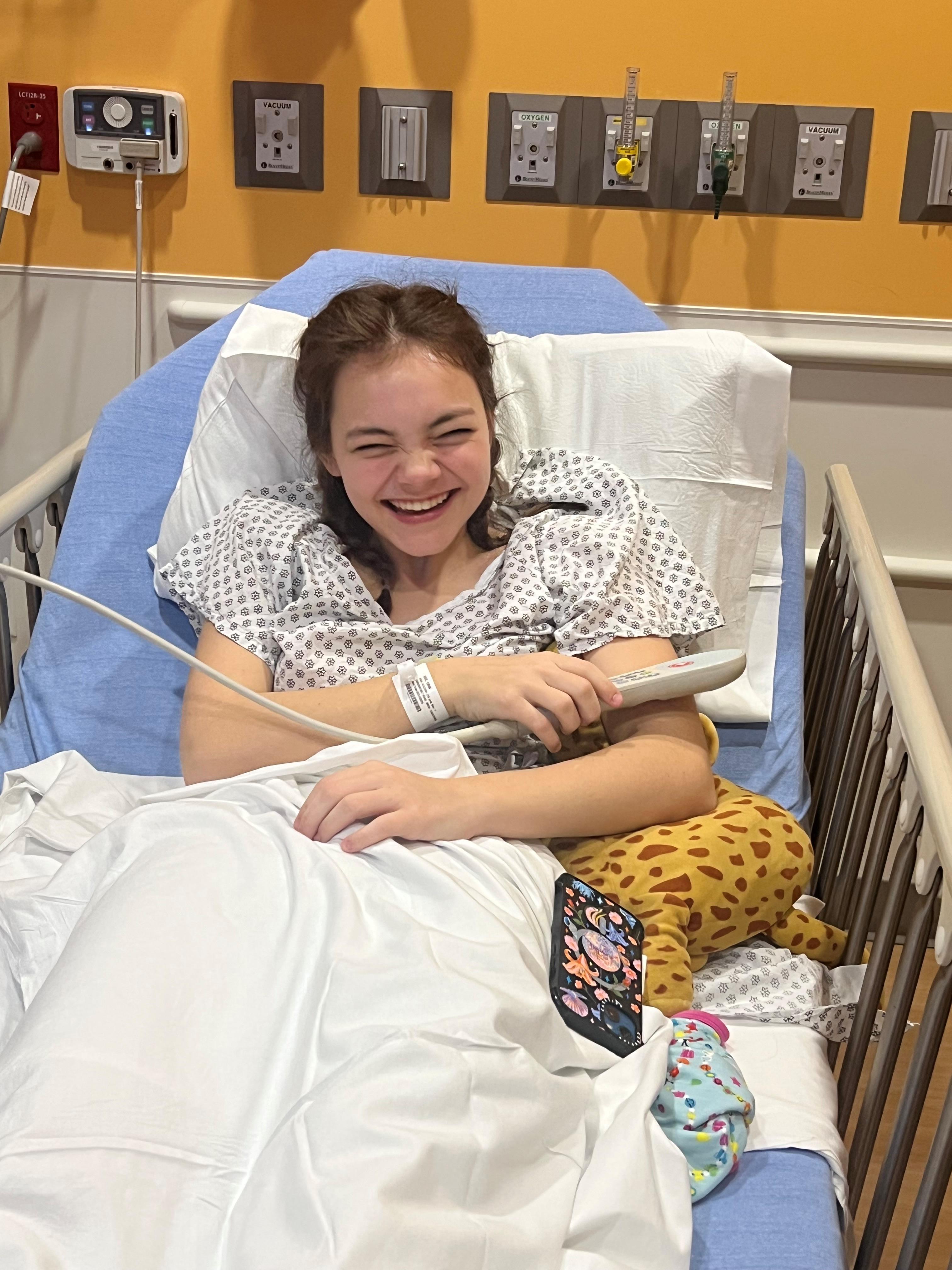 “She’s such an excellent student, but the pain and lack of sleep were wearing her down,” said Lana. “I trusted her care team completely. I’ve worked with physicians for years, and their bedside manner is remarkable. They were the best to do Erin’s hip surgery.”
That trust, Lana said, made the decision much easier. They scheduled Erin's surgery at Manning Family Children's for February 2025.
Surgery and recovery
The operation—a periacetabular osteotomy—took several hours. They reshaped and repositioned Erin’s hip socket to give the joint proper coverage. Rather than replacing the hip, the procedure preserves it, improving long-term function and lowering the risk of early arthritis.
Erin spent two nights in the hospital, one fewer than what is typical, thanks to her remarkable progress. Physical therapists had her up and walking with a walker and practicing stairs before she went home. She recovered at home for three weeks, but only missed two weeks of school—Mardi Gras break landed right in the middle of her recovery.
When she returned to school, she was a pro with her crutches. Her friends carried her books and teachers offered flexibility. “Everyone was amazing,” she said.
Six weeks later, she was down to a single crutch and back in outpatient therapy closer to home.
A setback on the other side
By summer, Erin’s right hip had healed well. She was excited for tennis tryouts and eager to get back on the court for her junior year.
But tennis wasn’t in the cards just yet.
“I started to feel pain and similar symptoms on my left side,” she said. “At my six-month visit, I told my doctor at Manning Family Children’s, and imaging showed I had hip dysplasia on that side, too.”
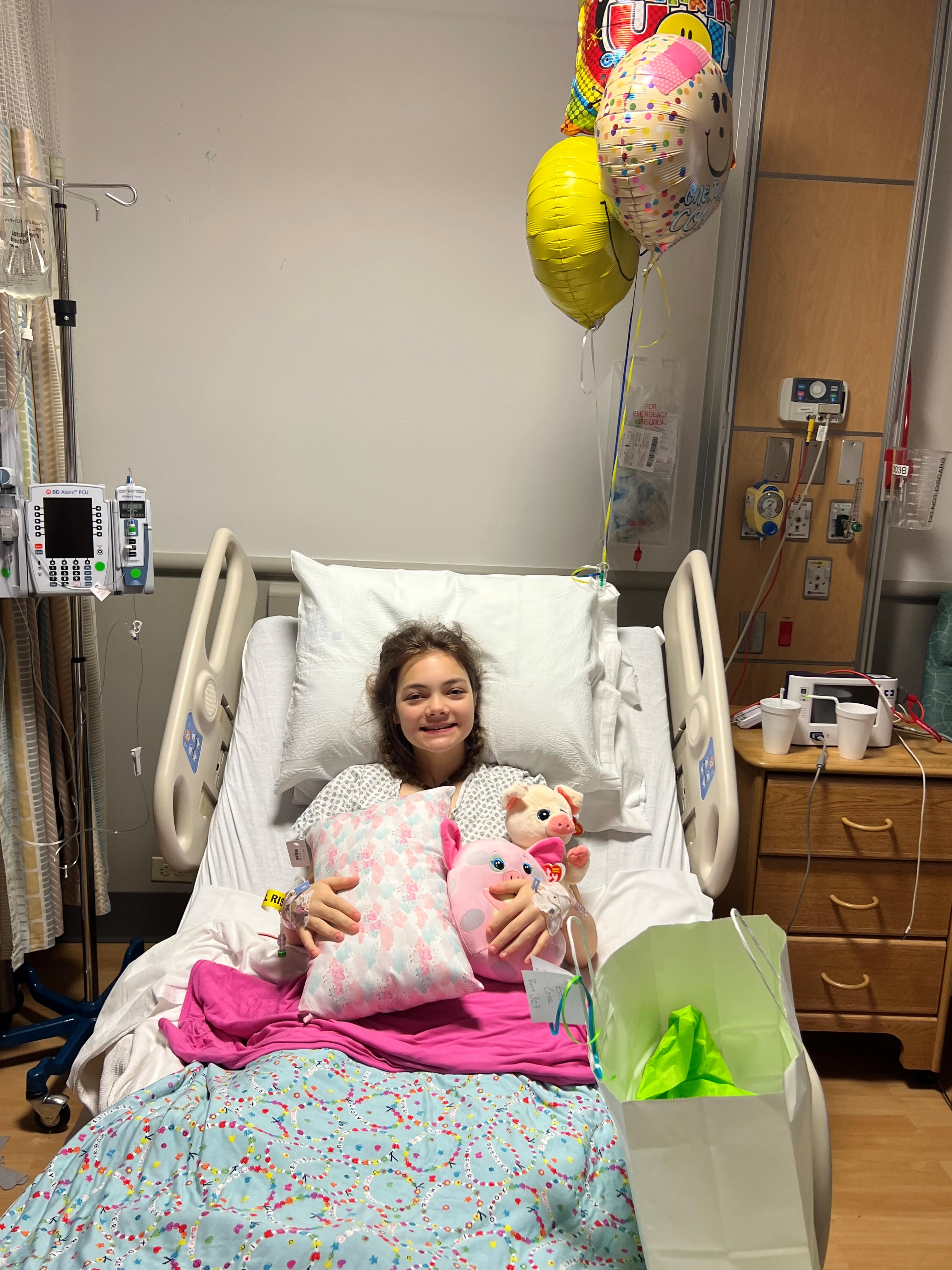 That meant Erin wouldn’t be able to try out for the tennis team that year—a disappointing setback. Erin turned her focus back to physical therapy.
In December 2025, she underwent the same surgery on her left hip. She's hopeful and has her sights set on the court for senior year, a strong finish to round out her high school career.
Through it all, Lana credits Manning Family Children’s for guiding her daughter through a stressful stretch. “Every step of the way, the staff treated Erin with compassion. Her doctor was not only a surgeon but a teacher—to his residents and to us. He made sure we understood every decision.”
She adds that the hospital’s integrated care, including emergency, orthopedics, inpatient physical therapy, and follow-up services, gave them confidence and continuity. “You never feel lost in the system there,” she said.
Why families choose Manning Family Children’s for orthopedic care
Hip dysplasia can hide in plain sight, especially in teens. Groin pain, popping, or stiffness that lingers for more than two weeks deserves a closer look. Manning Family Children’s offers specialized pediatric orthopedic care so young patients like Erin can recover safely and get back to the activities they love.
Erin’s journey is still unfolding, but one fact is clear: the team at Manning Family Children’s has helped her take meaningful steps toward getting her life back.
To learn more about the orthopedic program at Manning Family Children's, explore our pediatric orthopedic services in New Orleans.
###
About Manning Family Children’s: Manning Family Children’s is a 263-bed, non-profit academic pediatric medical center that offers comprehensive healthcare services, including over 40 pediatric specialties, just for children. With more than 600 pediatric providers, Manning Family Children’s offers a comprehensive array of specialized pediatric services in Louisiana and the Gulf South. In addition to its main campus located in New Orleans, Children’s operates a network of specialty clinics across Louisiana, including in Covington, Baton Rouge, Alexandria, Lafayette, and the Mississippi Gulf Coast. Children’s offers primary care at 17 convenient locations, along with a network of statewide pediatric affiliations. Children’s is a proud member of LCMC Health, a Louisiana-based, not-for-profit hospital system which also includes New Orleans East Hospital, Touro, University Medical Center New Orleans, West Jefferson Medical Center, East Jefferson General Hospital, Lakeview Hospital, and Lakeside Hospital. Learn more at manningchildrens.org.


