From patient to future caregiver: Tim Connor’s full-circle journey at Manning Family Children’s
- Category: Patient Stories
- Posted on:

When Tim Connor walked through the doors of Manning Family Children’s as a radiology student this spring, it felt familiar. And not just because he had visited the hospital before.
It was because 20 years earlier, the highly skilled healthcare professionals who walked those hallways helped save his life.
Today, the 35-year-old resident from Slidell is preparing to graduate from Delgado Community College’s radiologic technology program. He recently completed clinical rotations at Manning Family Children’s, the same hospital where he underwent three emergency brain surgeries as a teenager.
For Tim, the experience was more than a clinical assignment. It was a return to the place that gave him a second chance.
A Mysterious Illness Changes Everything
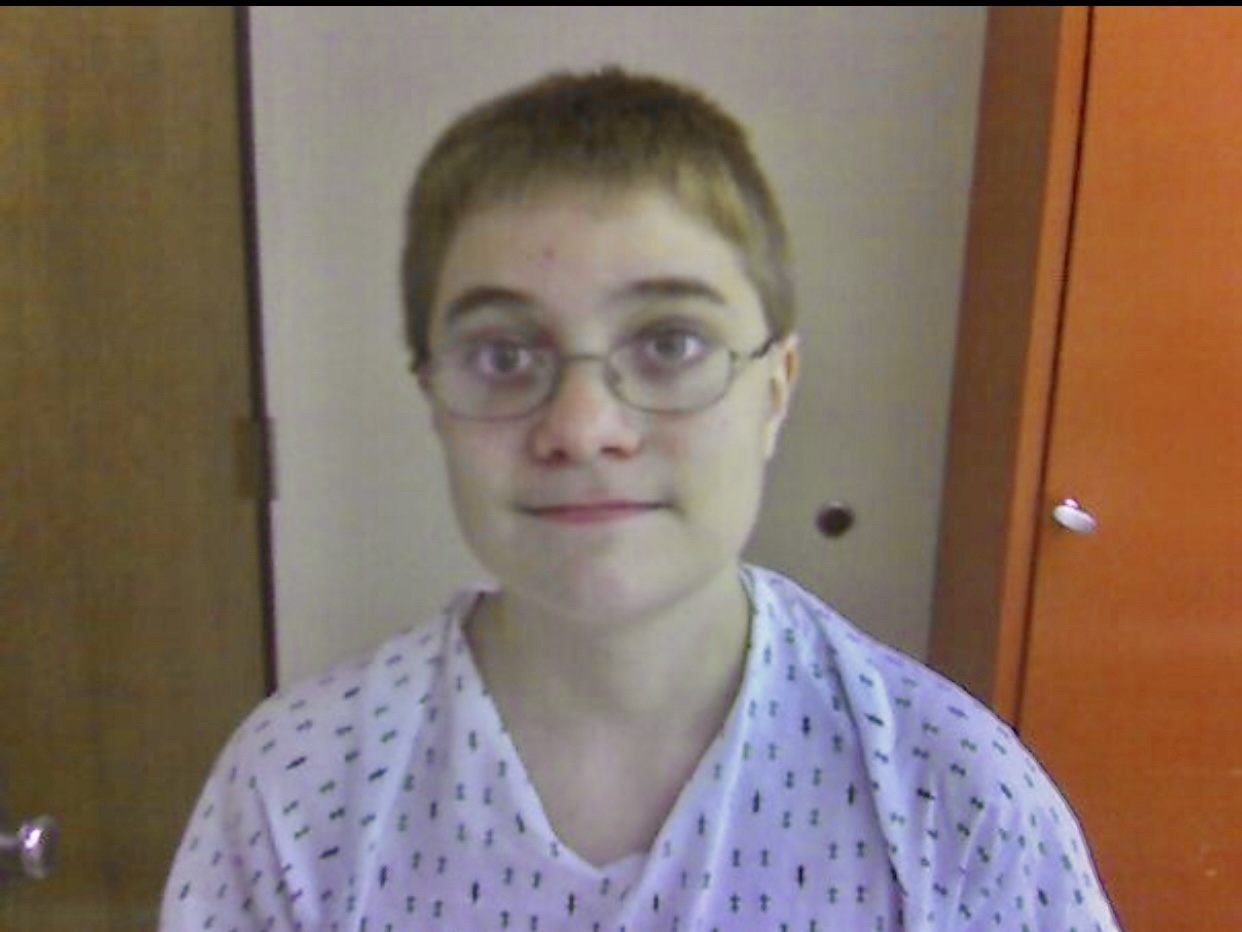 Tim was 11 years old when symptoms began to appear. Over the next several years, he experienced severe headaches, nausea, personality changes, and mood swings.
At first, no one knew what was causing them.
But then, during a trip to Chicago, a relative who worked as a nurse noticed something concerning. “My aunt thought it looked neurological,” Tim said.
When Tim returned home to Louisiana, doctors ordered a magnetic resonance imaging (MRI), which uses powerful magnets to create detailed images of structures inside the body.
The results revealed Tim had a serious neurological problem.
Doctors diagnosed him with hydrocephalus, a condition that occurs when too much cerebrospinal fluid builds up inside the brain, causing pressure that can damage brain tissue.
Emergency Brain Surgery
Doctors quickly admitted Tim to Children’s for emergency surgery. The first procedure involved placing a shunt, a small tube designed to drain excess fluid and relieve pressure on the brain.
Unfortunately, within days, complications developed. Doctors determined the shunt needed to be removed immediately and performed a second surgery to stabilize the pressure inside his brain.
Soon afterward, Tim underwent a third procedure called an endoscopic third ventriculostomy (ETV). This is a minimally invasive neurosurgical procedure that creates a small opening inside the brain’s fluid pathways, allowing cerebrospinal fluid to drain naturally and reducing pressure without the need for a permanent shunt.
Using a tiny camera and specialized surgical instruments, surgeons carefully created a new pathway for fluid flow. “No question about it, the doctors at Children’s knew exactly what to do. Within a week, I had the ETV,” Tim said.
The surgery proved successful, but recovery would take much longer.
A Long Road Back
Tim spent about six weeks in the hospital, where doctors closely monitored him with various imaging scans. They continued to follow his progress as he grew older to make sure the hydrocephalus did not return.
“It took years to recover and get my dexterity back. I had to relearn a lot of things,” Tim said. “For a long time, I didn’t know what I wanted to do with my life after my health scare.”
He admits he floundered for several years. Eventually, he found a new direction. He attended the University of New Orleans and studied film and communication arts before spending years working in the film and television industry as a sound technician
But by 2023, the film and TV industry had been put on ice by the writers’ strike. “I knew the film industry was a roller coaster,” he said. “I had gotten tired of the ride. Sometimes you had money but no time, or time but no money. I was ready for a change.”
As he considered his next step, he sought advice from a cousin who works as a nurse. “She told me radiology would be right up my alley,” Tim said, noting that the more he researched the profession, the more radiology made sense.
He jokes about the fact that he went from sound to imaging. Radiologic technologists use medical imaging equipment to help physicians diagnose injuries and illnesses. They perform X-rays and assist with other imaging procedures that play a critical role in patient care.
Tim discovered Delgado’s radiologic technology program and realized he had already completed many of the prerequisite courses. He applied and was accepted on his first attempt.
Returning to the Place that Changed His Life
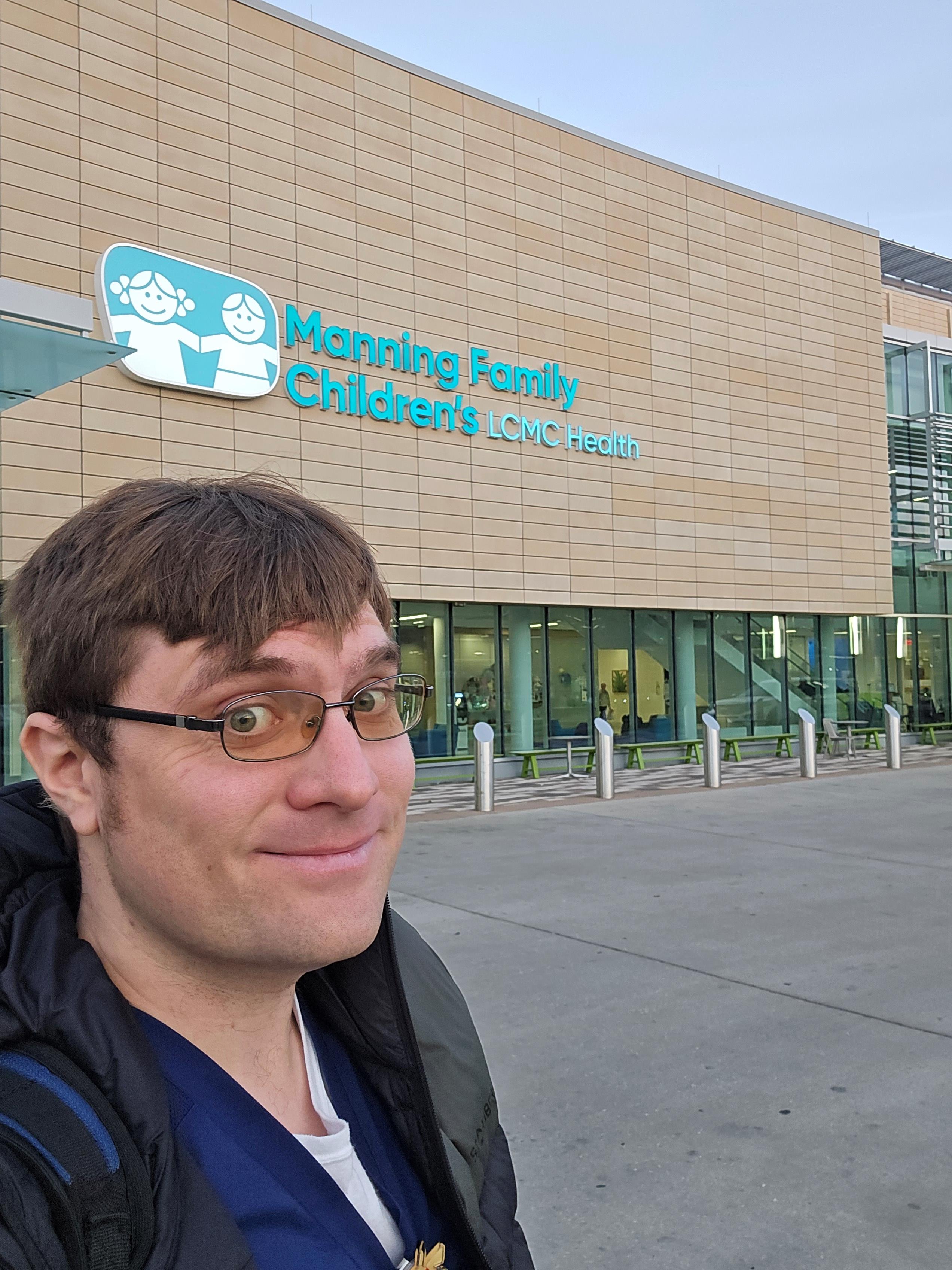 As part of his training, Tim completed clinical rotations at Manning Family Children’s.
Returning as a student healthcare professional brought back memories of a difficult chapter in his life, but it also reminded him how far he had come.
Today, Tim works as needed within LCMC Health while he completes his training. After graduation, he plans to earn additional certification in CT imaging and eventually pursue a degree in nuclear medicine, a specialty that uses small amounts of radioactive materials to diagnose and treat disease.
For Tim, healthcare combines many of the technical skills he enjoyed in film production while offering something even more meaningful.
“It has a lot of similarities to what I used to do in the film industry,” he said. “But the big thing for me is being able to help people.”
His experiences as a patient continue to shape the way he views his future profession.
“Knowing what I went through and having had to find myself again after brain surgeries, I want to help other people through that process,” Tim said. “Maybe help them do it a little quicker.”
The hospital that once cared for him as a frightened teenager is now helping prepare him for a career dedicated to caring for others. “My journey is a constant reminder to me that healing journeys do not always end when a patient leaves the hospital,” he said. “Sometimes they come full circle.”
To learn more about the neurology program at Manning Family Children’s in New Orleans, please visit: https://www.manningchildrens.org/services/neurosciences/neurology/


