From NICU to tee-ball: How Walker overcame a newborn brain bleed and seizures at Manning Family Children’s
- Category: Patient Stories, Neonatal ICU, Neurosurgery
- Posted on:

When Walker Boudreaux was born with bleeding in his brain and seizures no one could see, our NICU, neurology, and neurosurgery teams were by his side. Today, he's seizure-free and thriving.
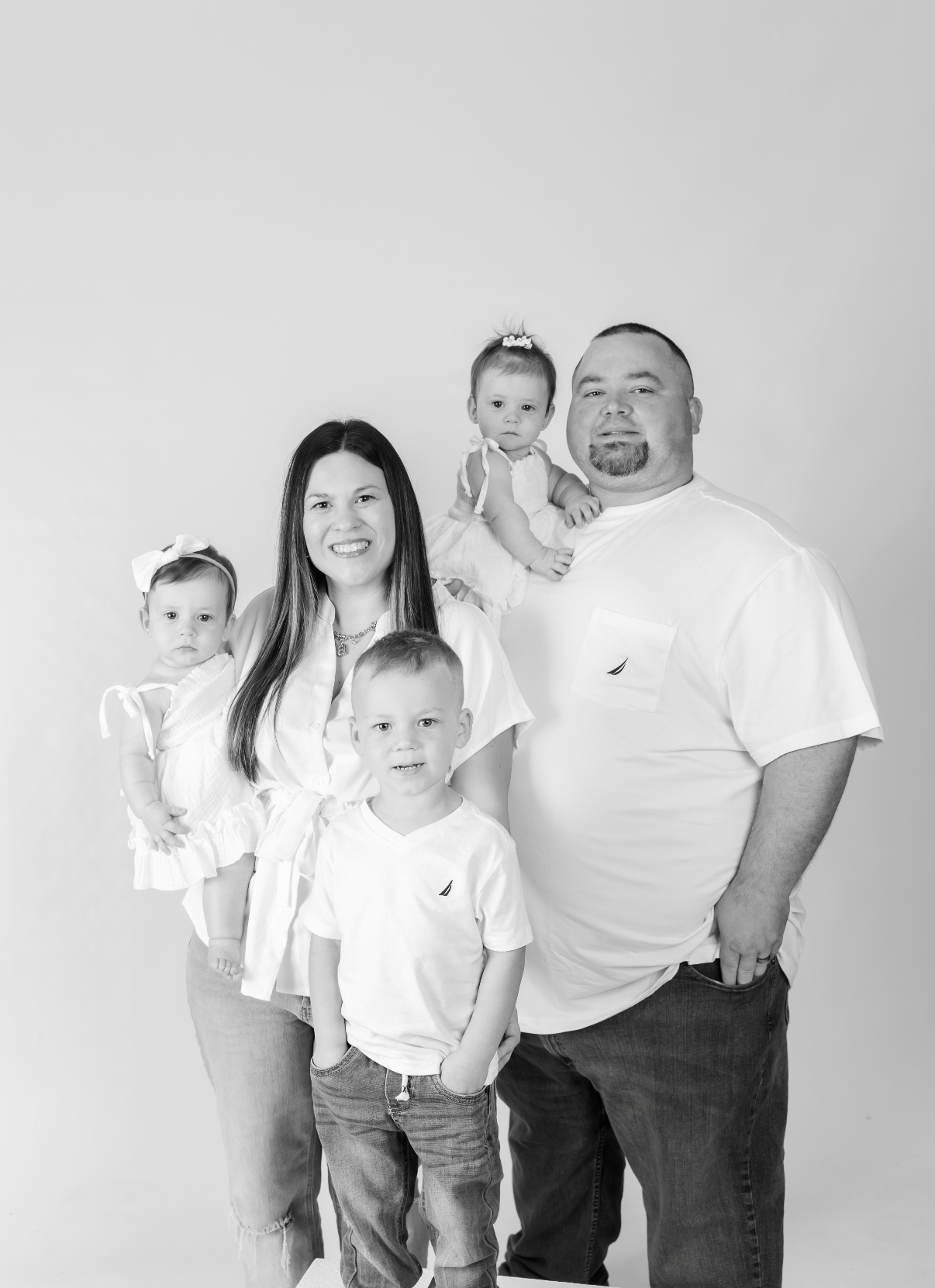
Walker Boudreaux is always on the move. At 4 years old, he loves trucks, soccer, tee-ball, lemonade, pizza and donuts. His parents, Samantha and Matthew, describe him as "all boy": adventurous, talkative and full of personality. He's also a proud big brother to his 18-month-old twin sisters.
Watching him today, it's hard to imagine how frightening his first days of life were.
Just after birth, Walker was diagnosed with bleeding in his brain that caused seizures. That diagnosis brought his family to the neonatal intensive care unit (NICU) at Manning Family Children's, where a team of specialists would help shape his future.
Newborn seizures lead to a NICU transfer
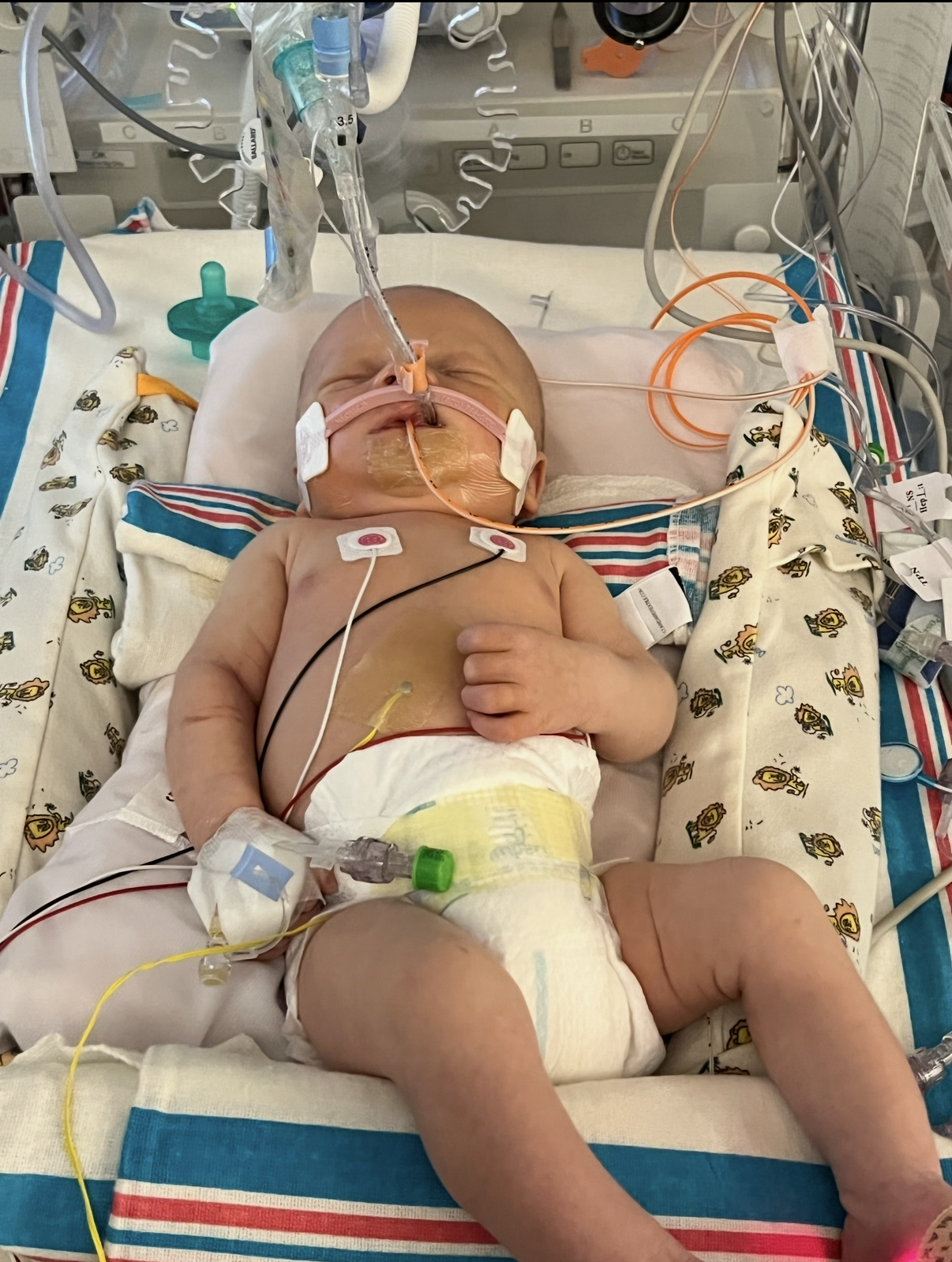 Walker was born in December of 2021 at a community hospital in Louisiana after a long, difficult labor. Samantha had been in labor for nearly an entire day.
The family expected to celebrate the arrival of a healthy baby boy. Instead, Walker's doctors grew concerned soon after delivery when he showed signs of seizure activity. As they worked to stabilize him, they also noticed a large bruise on the back of his head.
"They told us he had a seizure shortly after delivery," Matthew recalled. "Then they discovered the large bruise. We didn't know what was going on yet. We just knew something wasn't right."
Walker needed specialized care, so the next day he was transferred to the NICU at Manning Family Children's. That meant leaving his mom just one day after he was born. While Samantha stayed behind to recover from delivery, Matthew and his father drove ahead to meet Walker in New Orleans.
"I felt pulled in two directions," Matthew said. "I wanted to be there for my wife, but I also knew I needed to get to our son."
Finding answers in the NICU
Once Walker arrived in the NICU, specialists quickly began evaluating his condition.
Imaging confirmed he had a temporal lobe hemorrhage, or bleeding in the temporal lobe of the brain. According to Walker's child neurologist, Daniella Miller, MD, the bleeding made his brain hyperexcitable, which led to seizures soon after birth
The Boudreaux family was quickly surrounded by a team of specialists dedicated to Walker's care. Neonatologist Jeffrey Surcouf, MD, coordinated his treatment in the NICU while his neurosurgeon closely monitored the bleeding and swelling in his brain.
"There was concern about the swelling," Matthew said. "They told us he might need surgery if it didn't improve. Thankfully, it went down on its own and surgery wasn't necessary."
As Walker's condition stabilized, the family met with Dr. Miller, who helped evaluate and manage the seizure activity that had been detected shortly after birth.
Focal seizures: Seizures you can’t see
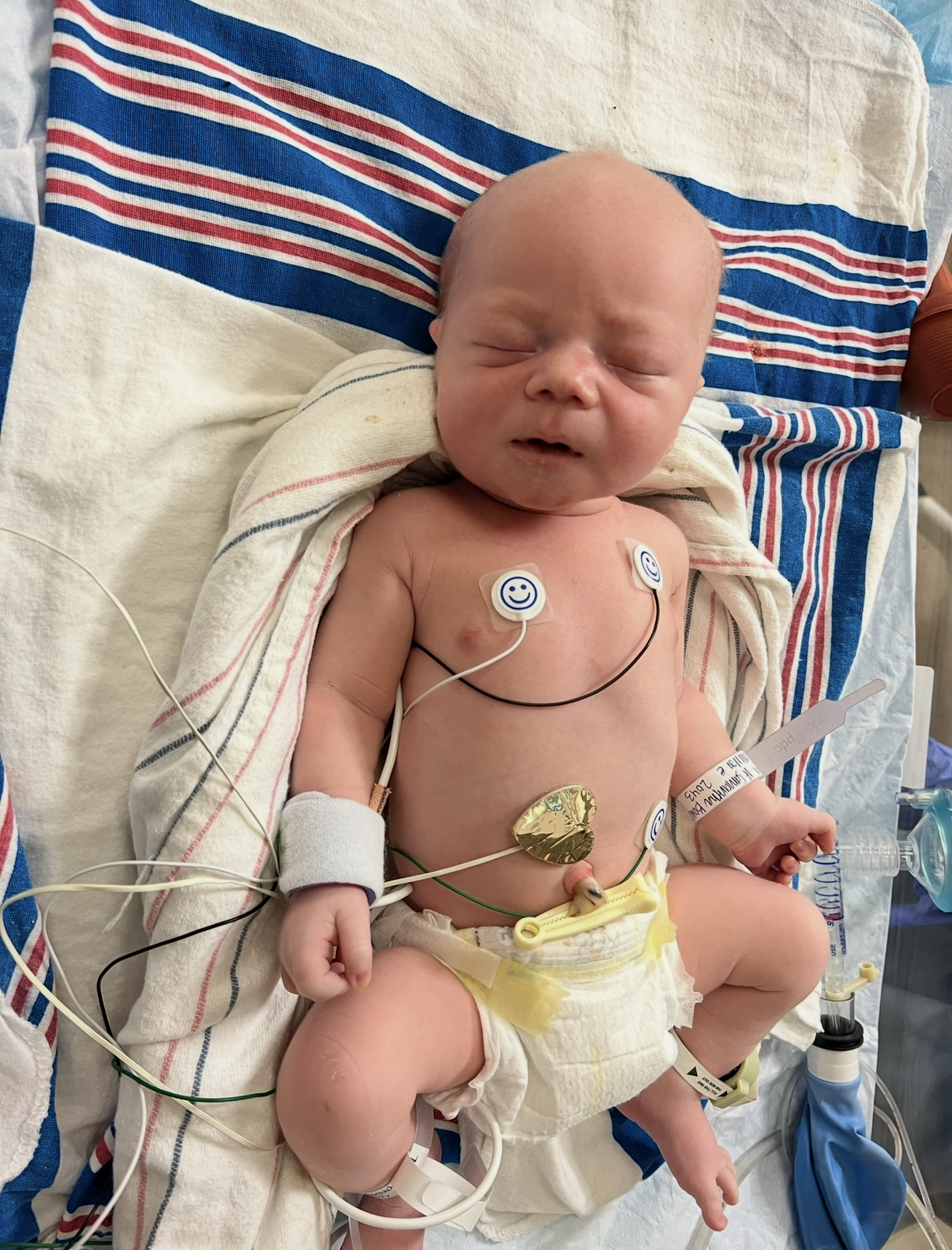 Many people picture a seizure as shaking or convulsions. Walker's seizures were nearly invisible. Dr. Miller diagnosed him with acute symptomatic focal seizures caused by the hemorrhage, and he showed few outward signs when one was happening.
"Rather than presenting with shaking or convulsions, his seizures appeared as periods of apnea, or temporary pauses in breathing, as well as elevated heart rate," Dr. Miller said. "Seizures in newborns are often much more subtle than people realize. Changes in breathing or heart rate may be the only signs."
Because the seizures were so subtle, our team used continuous EEG monitoring to track Walker's brain activity around the clock. That monitoring guided treatment decisions and helped bring the seizures under control.
Dr. Miller and the neurology team first treated Walker with phenobarbital, one of the most commonly used anti-seizure medications for newborns. When seizure activity continued, they added a second medication, levetiracetam.
“The first time we felt like we could breathe”
Those early days in the NICU were full of uncertainty.
"When you hear your baby has a brain injury, your mind goes everywhere," Matthew said. "I worried if he would be able to walk. Would he be able to talk? Would there be long-term effects? There were so many unknowns."
Slowly, Walker began to improve. His seizures came under control with medication, and over time, the bleeding in his brain was reabsorbed. For Matthew and Samantha, seeing their son get better was a tremendous relief.
"It was the first time we felt like we could breathe," Matthew said. "Being able to hold him and feed him by the fourth and fifth day in the NICU meant everything to us."
Care beyond the NICU
 When Walker went home, his family left with a plan for follow-up care with both neurology and neurosurgery. During his first year, they returned every few months so his doctors could track his progress. Walker consistently met developmental milestones.
"He really checked all the boxes," Matthew said. "His speech was good. His motor skills were good. We never saw delays."
As Walker grew, follow-up imaging revealed a small area of permanent brain tissue loss caused by the original hemorrhage.
"This develops over time as a consequence of the injury," Dr. Miller explained.
Even so, Walker kept thriving. Because his progress was so strong, Dr. Miller began carefully weaning him off his anti-seizure medication in March 2023.
Thriving and seizure-free
Today, Walker has been seizure-free for more than two-and-a-half years and no longer requires anti-seizure medication.
"He is doing exceptionally well," Dr. Miller said. "He continues to thrive and is not only meeting but surpassing developmental expectations for a child his age."
His days are now filled with soccer practice, tee-ball games, outdoor adventures and keeping up with his little sisters. His parents never take that for granted.
"He's full of life," Matthew said. "He's smart. He loves to talk. He's always outside doing something. If you met him today, you'd never know everything he went through as a baby."
Compassion every step of the way
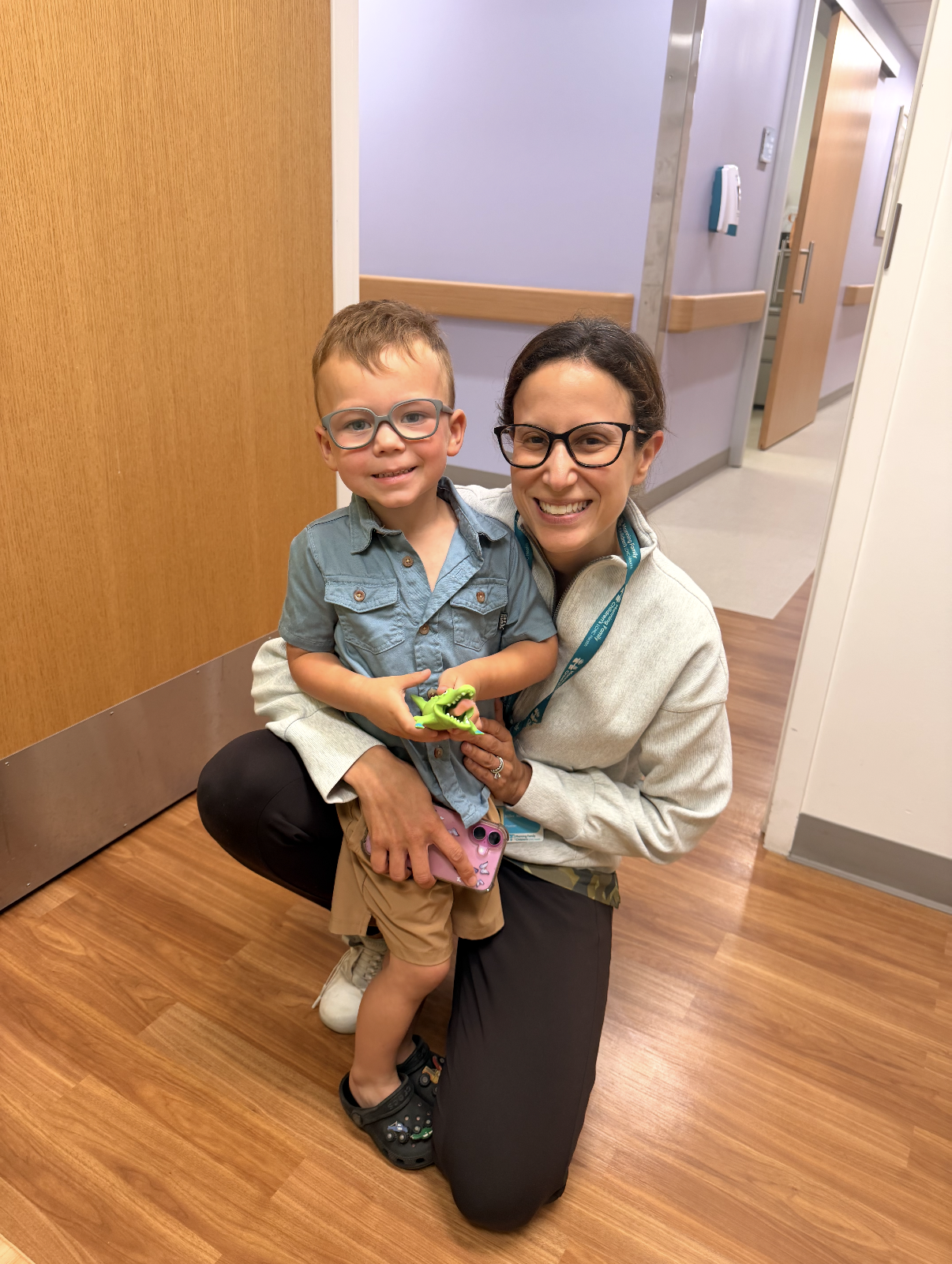 As remarkable as Walker's recovery has been, Matthew says what stands out most is the compassion his family felt along the way.
"Everybody was incredible," he said.
He's especially grateful for the bond the family built with Dr. Miller.
"Dr. Miller was a shining light through all of this," Matthew said. "She explained everything in a way we could understand. You could tell she genuinely cared about Walker and our family."
For Dr. Miller, the feeling is mutual.
"When you care for a patient from the very beginning of life, that child and their family become much more than patients—they become family," she said.
She has watched Walker grow from a critically ill newborn into the thriving little boy he is today, and celebrating each milestone alongside his family has been one of the greatest rewards of caring for him.
"It has also been wonderful to see their family grow with the addition of his younger twin sisters," Dr. Miller said. "To be welcomed into such an important part of a family's life and walk beside them through both hardships and triumphs is an extraordinary gift and one of the greatest privileges of being a physician."
Over the years, the family has marked Walker's progress with hugs and photos alongside the doctor who helped guide them through their hardest days.
A message of hope for other families
Matthew still remembers how overwhelming those first days felt. His advice for families facing a similar diagnosis is simple.
"Trust God. Trust your partner. Trust the medical team caring for your child," he said. "There is hope. There is always hope."
For Walker and his family, that hope became reality.
About the Manning Family Children’s NICU
When a newborn needs critical care, every second counts. As Louisiana’s only Level IV NICU with every pediatric medical and surgical specialty under one roof, Manning Family Children’s provides the highest level of neonatal care in the state. Our nationally ranked team, which includes the region’s top pediatric subspecialists from LSU Health New Orleans and Tulane University School of Medicine, cares for babies born as early as 22 weeks, many weighing barely a pound. In 2025 alone, our NICU cared for 272 critically ill babies transferred from 39 hospitals across the region.
Our current 35-bed NICU was built for a different era. That’s why we’re building a new 60-bed Level IV NICU with triple the space, private family rooms and advanced technology, so we can always say “yes” to the babies who need us most. It’s set to open in 2027.
Your support makes it possible. Every gift means more miracles, more birthdays and more first steps for Louisiana’s littlest.
Learn more about our NICU >> | See plans for our new NICU >> | Support Louisiana’s Littlest >>
About the Manning Family Children’s Neuroscience Center
From a newborn’s first seizure to a teen’s concussion, the Neuroscience Center at Manning Family Children’s cares for children with conditions affecting the brain, spine, nerves and muscles. Our pediatric neurologists, fellowship-trained neurosurgeons, rehabilitation specialists and neurodiagnostic team work side by side, so families get coordinated care from experts who treat only kids.
Our Epilepsy Center is accredited as a Level 4 center by the National Association of Epilepsy Centers, the highest level of epilepsy care available, in partnership with LSU Health New Orleans. Our hospital also received the first ROSA® surgical robot for epilepsy treatment in the state of Louisiana, which uses computer-guided, minimally invasive technology to treat children with severe epilepsy. Through specialty clinics for cerebral palsy, spina bifida, concussion, neuromuscular conditions and more, children can see several specialists in a single visit.
Because neurological conditions often affect the whole family, our nurse navigators, child life specialists, social workers and therapists support patients and caregivers every step of the way.
Learn more about pediatric neurology >> | Learn more about pediatric neurosurgery >>
***Please note: The images in this post are for artistic and marketing purposes only. Our precious babies in the NICU are on continuous cardio-respiratory monitoring. Parents and caregivers should always follow the AAP safe sleep guidelines and under no circumstances should babies at home be placed prone to sleep, or have items such as toys, loose bedding, or blanket rolls in their cribs.


