A perfect match: Brantley’s journey from high-risk leukemia to bone marrow transplant at Manning Family Children’s
- Category: Patient Stories, Cancer Care
- Posted on:

In August 2025, 13-year-old Brantley O’Berry was playing pee-wee football when his mother, Jena, began noticing bruises covering his arms. Brantley thought they came from playing sports. At first, that explanation seemed reasonable.
Then the bruising became harder to ignore.
One day, Brantley went to make a tackle and ended up hitting the ground hard. The next morning, he was not feeling well. Jena explained that while using the family’s ATV to take out the garbage, he struck some pine trees. He was disoriented after the minor accident and Jena decided to take him to the local emergency room when she noticed that what should have been a minor bruise on his shin had developed into a serious-looking contusion.
She couldn’t shake the feeling that Brantley’s bruising deserved a closer look by a physician. “I asked for bloodwork because of the bruising,” she said. “I thought maybe his iron was low. I wasn’t sure, but I just felt something was wrong.”
The results of the first blood test did not look right to doctors. Unfortunately, the second set of tests didn’t look any better.
Brantley was referred to a pediatric hematologist by a physician who said something Jena will never forget. “'Worst-case scenario,' that doctor told me, 'it could be leukemia,'” Jena recalled. “I was freaking out.”
That’s when she called Brantley’s pediatrician and asked her to review the bloodwork. His pediatrician called back and told her to take Brantley to Manning Family Children’s in New Orleans as soon as she could get there.
A diagnosis that changes everything
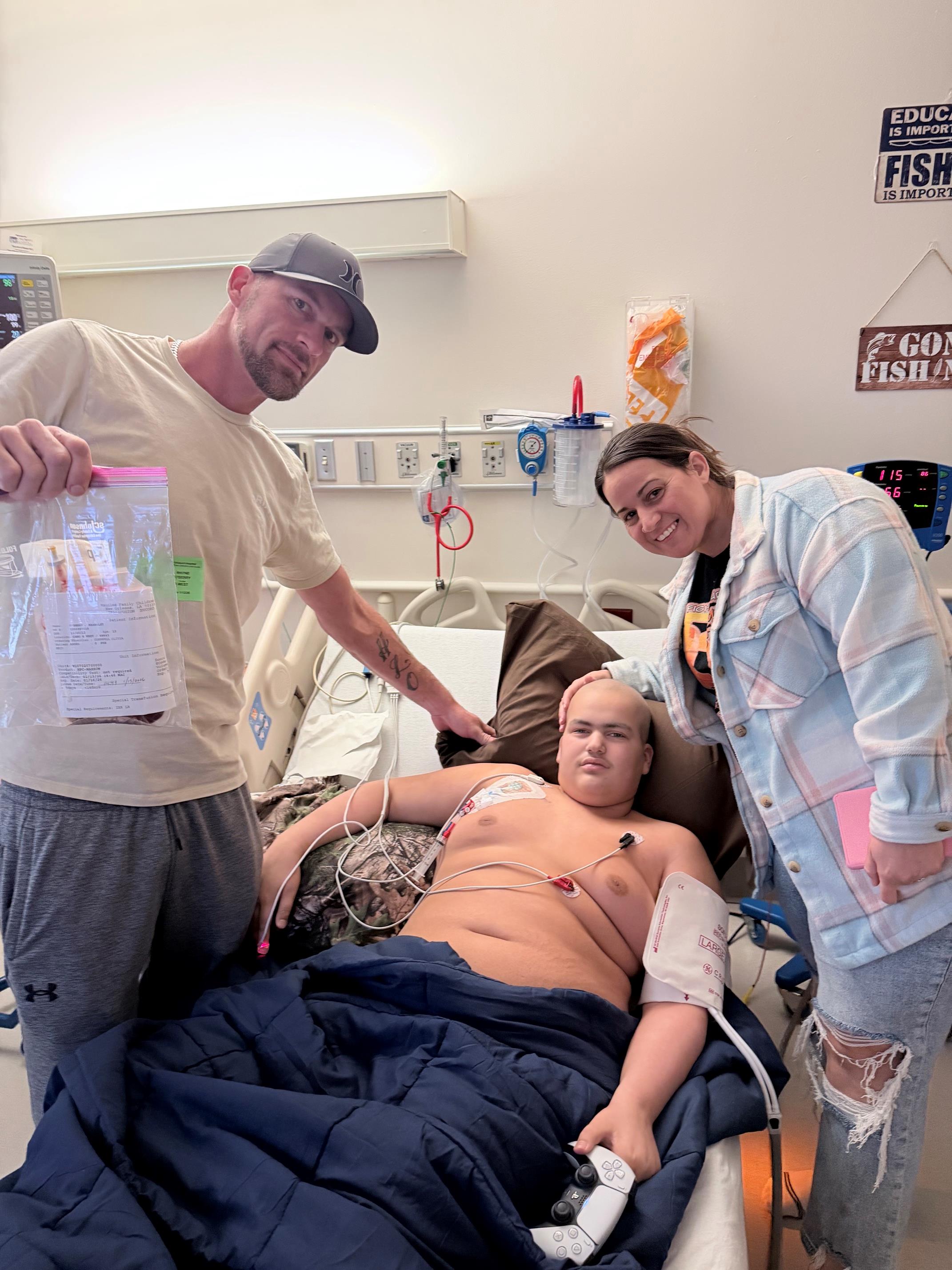 At Manning Family Children’s, Brantley met Pinki Prasad, MD, MPH, a pediatric oncologist who would lead his cancer care. Dr. Prasad and her team repeated his testing and confirmed that he had leukemia. A bone marrow biopsy was needed to determine which type.
Within days, the family learned that the bruises Brantley had blamed on football were an early sign of an aggressive blood cancer: acute myeloid leukemia (AML). AML is a fast-growing cancer that begins in the blood-forming cells of the bone marrow. The abnormal cells, known as blasts, can multiply rapidly and interfere with the marrow’s ability to produce normal red blood cells, infection-fighting white blood cells and platelets.
Dr. Prasad and her team sat down with the family. “She told us that since platelets help blood clot, a person with low platelet levels can have unusual bruising or bleeding,” Jena said. “She was very kind but also straightforward. She told us that Brantley had an aggressive cancer, and she wanted to start treatment as soon as possible.”
For Jena and her husband, Wayne, the directness mattered. “Dr. Prasad is amazing,” Jena said. “If you ask a question, she will tell you the answer. My husband needed the truth, including the good, the bad and the ugly. We needed to know it all. We felt knowing everything was the only way to advocate for our son.”
Brantley started chemotherapy on August 31, just days after arriving at Manning Family Children’s. “I am so thankful for Dr. Prasad and her entire team,” Jena said. “They didn’t push anything under the rug. They were very aggressive and didn’t drag their feet with anything to take care of him.”
Genetic testing reveals a higher-risk leukemia
The initial plan called for several blocks of chemotherapy. But doctors still needed more information about Brantley’s leukemia. The following week, genetic and cytogenetic testing revealed two findings that placed Brantley in a higher-risk category: a KMT2A-MLLT10 rearrangement and a deletion involving a section of chromosome 5 known as 5q31, which includes the EGR1 gene.
Cytogenetics is the study of chromosomes and genetic changes within cancer cells. In AML, these findings can help physicians estimate how likely the leukemia is to respond to treatment and how likely it is to return.
The KMT2A gene normally helps control gene activity during blood-cell development. In Brantley’s leukemia cells, part of KMT2A had become abnormally joined with another gene, MLLT10. This type of rearrangement can drive leukemia and is associated with higher-risk disease.
The chromosome 5 abnormality added to the medical team’s concern. Together, the findings meant Brantley’s oncology team at Manning Family Children’s needed to consider a different treatment strategy. Jena said the family didn’t really have an option; Brantley needed to have a bone marrow transplant.
“Once we knew Brantley needed a transplant we knew we had to move quickly,” said Olivia Cornwell, CPNP-AC/PC, a bone marrow transplant nurse practitioner with the Stem Cell Transplant, Cell, and Gene Therapy Program at Manning Family Children’s. “It was his cytogenetics. When we are looking to determine if a patient needs a transplant, it depends on the patient’s level of risk.”
Dr. Prasad said the decision to recommend a transplant is never made casually. However, based on Brantley’s disease characteristics, without a bone marrow transplant, he faced a much greater risk of relapse. She estimated his chance of remaining cancer-free at the five-year mark after the completion of his chemo treatment at only about 30% if he received chemotherapy alone.
“Not every person is a numbers person,” Dr. Prasad said. But the numbers helped Brantley’s parents understand why his physicians believed chemotherapy alone would not be enough. The medical team recommended an allogeneic bone marrow transplant, a procedure in which a patient receives healthy blood-forming stem cells from a donor.
Finding a donor match
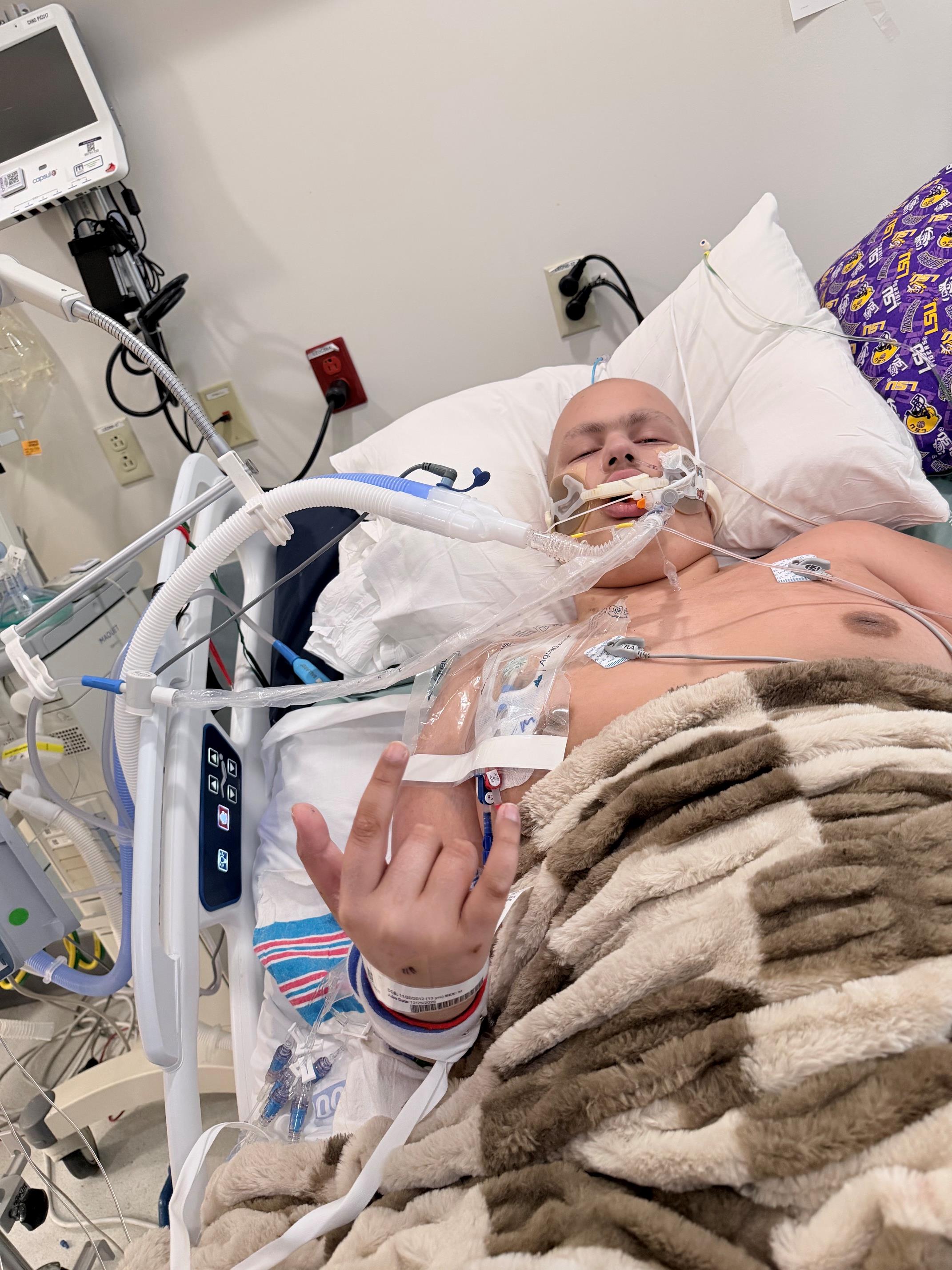 The next question was whether anyone in Brantley’s family could provide the right match. “For every person who is a full sibling, there’s a 25% chance they would be a perfect match,” Cornwell said.
“Matching,” she explained, is based on proteins called human leukocyte antigens, or HLA markers. These help the immune system recognize which cells belong in the body. The closer the donor and recipient match, the lower the risk of certain serious transplant complications.
Brantley’s brothers were tested and his younger brother, Jaxon, who was 10 at the time, was a match.
Under the direction of Benjamin Watkins, MD, director of the Pediatric Stem Cell and Cell Therapy Program at Manning Family Children’s, and the bone marrow transplant team, Brantley prepared for transplant. Before receiving Jaxon’s marrow, Brantley underwent intensive conditioning chemotherapy. This treatment is designed to destroy remaining leukemia cells and suppress the existing immune system so the donor’s healthy stem cells can take hold.
On January 13, 2026, Brantley received his brother’s donated bone marrow. The transplant itself marked a critical milestone. Unfortunately, Brantley’s recovery became far more complicated than physicians hoped.
A complex care journey after transplant
“Brantley was not a straightforward case,” Cornwell said. “He had numerous complications that are not typical for a BMT patient.”
One of the most serious was veno-occlusive disease, or VOD, also known as sinusoidal obstruction syndrome. VOD can develop after a stem cell transplant when small blood vessels in the liver become damaged and blocked. Brantley developed rising bilirubin levels, significant fluid retention, weight gain, and an enlarged liver.
Doctors treated him with diuretics, medications designed to help the body remove excess fluid. Despite those efforts, the fluid buildup worsened and began affecting his lungs. Brantley’s kidneys also became injured and could no longer adequately remove fluid and waste from his body.
He required continuous renal replacement therapy (CRRT). CRRT performs functions normally handled by the kidneys, filtering the blood continuously and removing excess fluid. Brantley also received defibrotide, a medication used to treat severe VOD after stem cell transplantation.
Then his neurologic status began to deteriorate.
Brantley developed progressive changes in his mental status. He became increasingly confused and less responsive. His physicians launched an extensive evaluation to determine why. As his condition worsened, Brantley was intubated and placed on mechanical ventilation to protect his airway.
He also had a previously known Chiari malformation, a structural condition in which brain tissue extends into the opening at the base of the skull. Because of that history, the neurosurgery team joined his care team. Neurosurgeons placed an external ventricular drain, or EVD. The temporary device allows physicians to monitor pressure inside the skull and drain cerebrospinal fluid if necessary. Thankfully, Brantley did not require more surgery.
Gradually, he began improving. His mental status recovered enough for doctors to remove the EVD. His kidney function improved, allowing the team to stop CRRT. He came off mechanical ventilation and was weaned from narcotic medications.
Eventually, he was well enough to leave the Pediatric Intensive Care Unit (PICU) and return to the pediatric hematology-oncology floor.
Rebuilding strength after weeks of critical illness
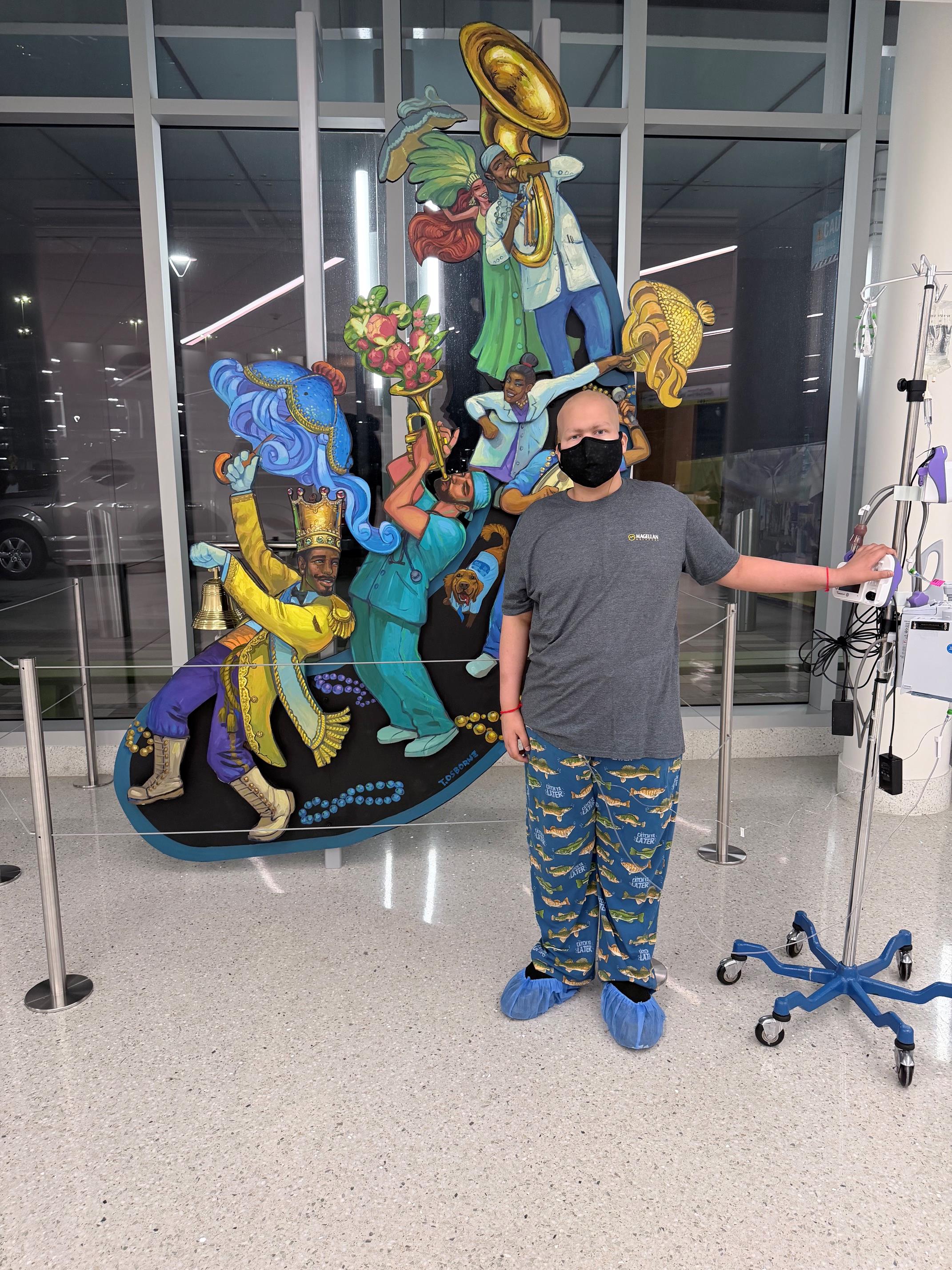 Surviving the immediate medical complications was only part of Brantley’s recovery. Weeks of serious illness, intensive care, and limited movement had taken a physical toll. Physical and occupational therapists worked with him to regain his strength, mobility, and ability to handle daily activities.
Meanwhile, his donor cells were doing what physicians hoped. Engraftment occurs when donor stem cells settle into the recipient’s bone marrow and begin making new blood cells.
Brantley engrafted successfully. “He had a tough route with the BMT, multiple complications that prolonged his stay,” Dr. Prasad said. “He got through it. His counts came up. He engrafted well.”
Before leaving the hospital, Brantley completed a home-care trial to make sure he and his family could safely manage his medical needs outside the inpatient setting. He was discharged March 17, more than two months after his transplant, and initially stayed with his mother at Ronald McDonald House while continuing close follow-up with the transplant team.
No sign of leukemia
Months later, the picture looks very different. At his approximately six-month post-transplant evaluation, Brantley underwent extensive testing. The results showed no sign of leukemia.
“He is doing really well,” Cornwell said. “His immune system is recovering nicely, and he continues to have no signs of leukemia. We are very happy with how well he is doing!
The transplant team continues to follow him closely, including monitoring his blood counts, immune recovery, and medications.
Jena is hoping her son may be able to return to school in person soon, but she realizes his body has been through an extraordinary ordeal. The family sees every milestone reached since the bone marrow transplant as cause to celebrate.
For Jena, the multidisciplinary care Brantley received at Manning Family Children’s made a lasting impression. From oncology and bone marrow transplant specialists to intensive care, nephrology, neurosurgery and rehabilitation, teams across the hospital worked together to help Brantley through each stage of his treatment and recovery.
About the Center for Cancer and Blood Disorders at Manning Family Children's
This National Childhood Cancer Awareness Month, we're proud to share stories that show what's possible when children have access to world-class care close to home. At Manning Family Children's, we don't make claims—we show proof. We treat more Louisiana kids with cancer than all other facilities combined, and our Center for Cancer and Blood Disorders is ranked No. 48 nationally in U.S. News & World Report's 2026–2027 Best Children's Hospitals rankings. We are home to Louisiana's first and only certified pediatric CAR-T cell therapy program and the state's only FACT-accredited pediatric bone marrow transplant program. As a member of the Children's Oncology Group, we're also actively conducting research at the forefront of childhood cancer care.
For 70 years, we've run to what others hesitate to face, so children across the Gulf South can receive nationally ranked care without leaving home, regardless of ability to pay.
Learn more about our nationally ranked program here.


