Blinatumomab Protocol: A new standard of care at Manning Family Children’s that gives patients with ALL leukemia the freedom to be kids
- Category: Patient Stories, Cancer Care
- Posted on:

In the summer of 2024, Violet Williams was a lively preschooler with a sassy sense of humor and a love of all things pink. She couldn’t get enough of reading and going to birthday parties—especially at Sky Zone Trampoline Park, where she could jump around with friends to her heart’s content.
But in late August 2024, Violet came down with a very high fever. She tested positive for pneumococcal strep, and her symptoms rose and fell in ways that looked like ordinary childhood illnesses. Her pediatrician wasn't alarmed and prescribed steroids, which helped her feel better for a short time. But the steroids also masked the early signs of a life-threatening diagnosis.
The diagnosis they never saw coming
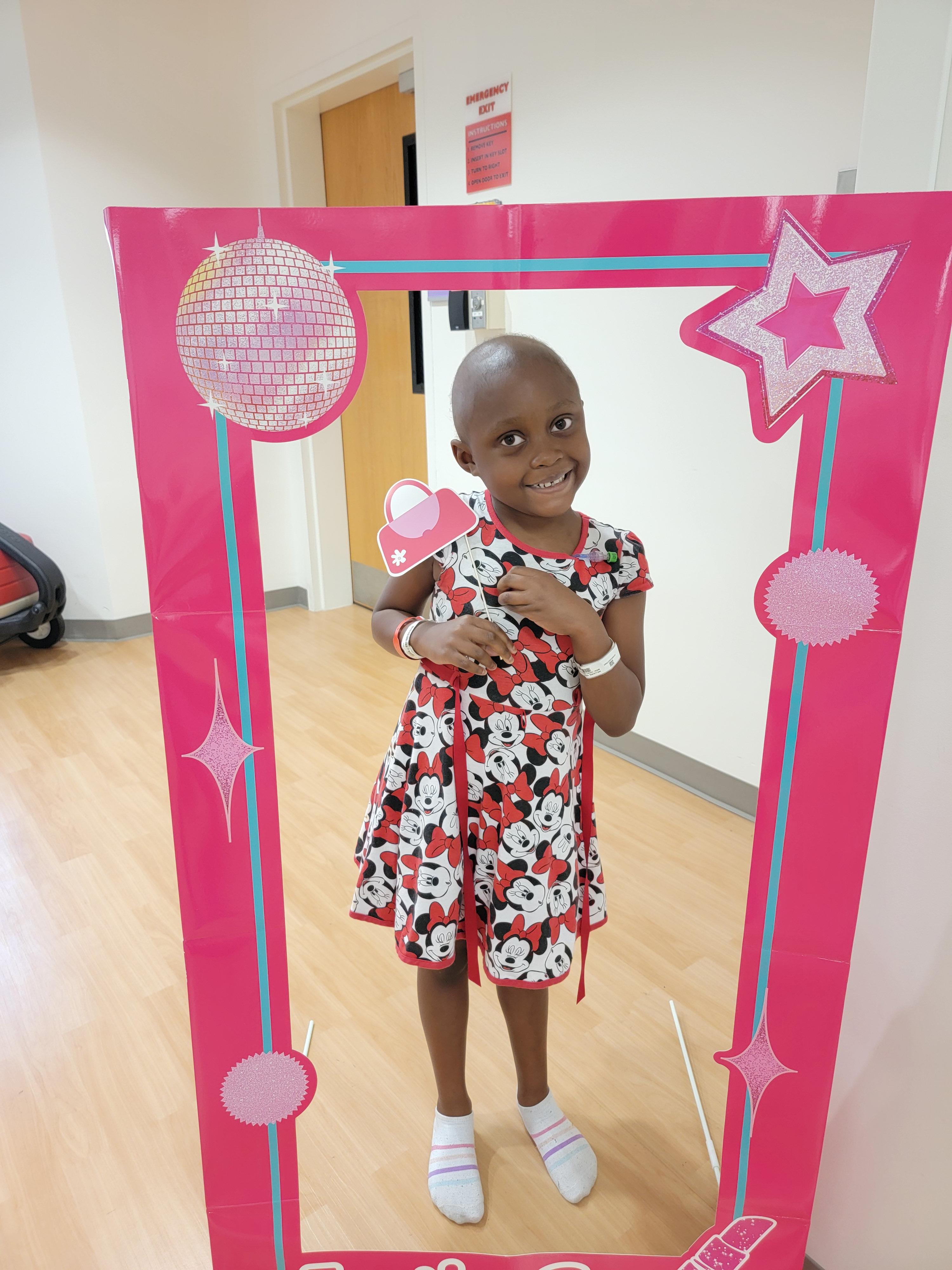 In early November, Violet’s high fevers returned and her mother, New Orleans resident Rihanna Williams, began the steady cycle most parents know too well: Tylenol, Motrin, medication reminder alarms day and night, calls to the pediatrician, and still “no answers that made any sense,” Rihanna said. “The pediatrician told us to wait and watch.”
But a few days later, Rihanna—a nurse at the Tulane School of Medicine—decided it was time to trust her own professional and motherly instincts. She took her daughter to the Emergency Department at Manning Family Children’s. It was a decision that saved Violet’s life.
At Children’s, Violet’s bloodwork revealed a hemoglobin level of 5.3, far below normal. “Other values were off as well,” Rihanna said. “That’s when the doctors told us they were 90 percent sure Violet had acute lymphoblastic leukemia (ALL).” ALL is a fast-growing blood cancer where the bone marrow produces too many immature white blood cells called lymphoblasts.
Rihanna worked as an emergency room nurse for 12 years before her current work with patients at the Tulane Sickle Cell Center of Southern Louisiana. She’d seen every kind of crisis, but nothing prepared her for this moment when she and her husband, John, received the news of Violet’s diagnosis.
“I was in disbelief about the diagnosis, but I also felt a bit relieved because now we had an answer and Violet could get treatment,” she said.
The team at Manning Family Children’s moved fast. A few days later, Violet had a lumbar puncture and a bone marrow biopsy which confirmed the diagnosis: Violet had ALL.
An oncologist with a clear, compassionate plan
Pinki Prasad, MD, MPH, Violet’s oncologist, laid out her treatment plan with careful detail. “Dr. Prasad was absolutely amazing. She walked us through everything and answered every question we had,” Rihanna said. “She explained what to expect with treatment and how Violet might respond to the chemotherapy she would be receiving over the coming months.”
Rihanna also asked for support from the hospital’s child life team at Manning Family Children’s. “I knew it was important for Violet to understand as much as she could about what was going on. I wanted to do everything possible to make the situation less frightening for her.”
Child Life specialists focus on supporting pediatric patients and their families as they navigate difficult healthcare situations.
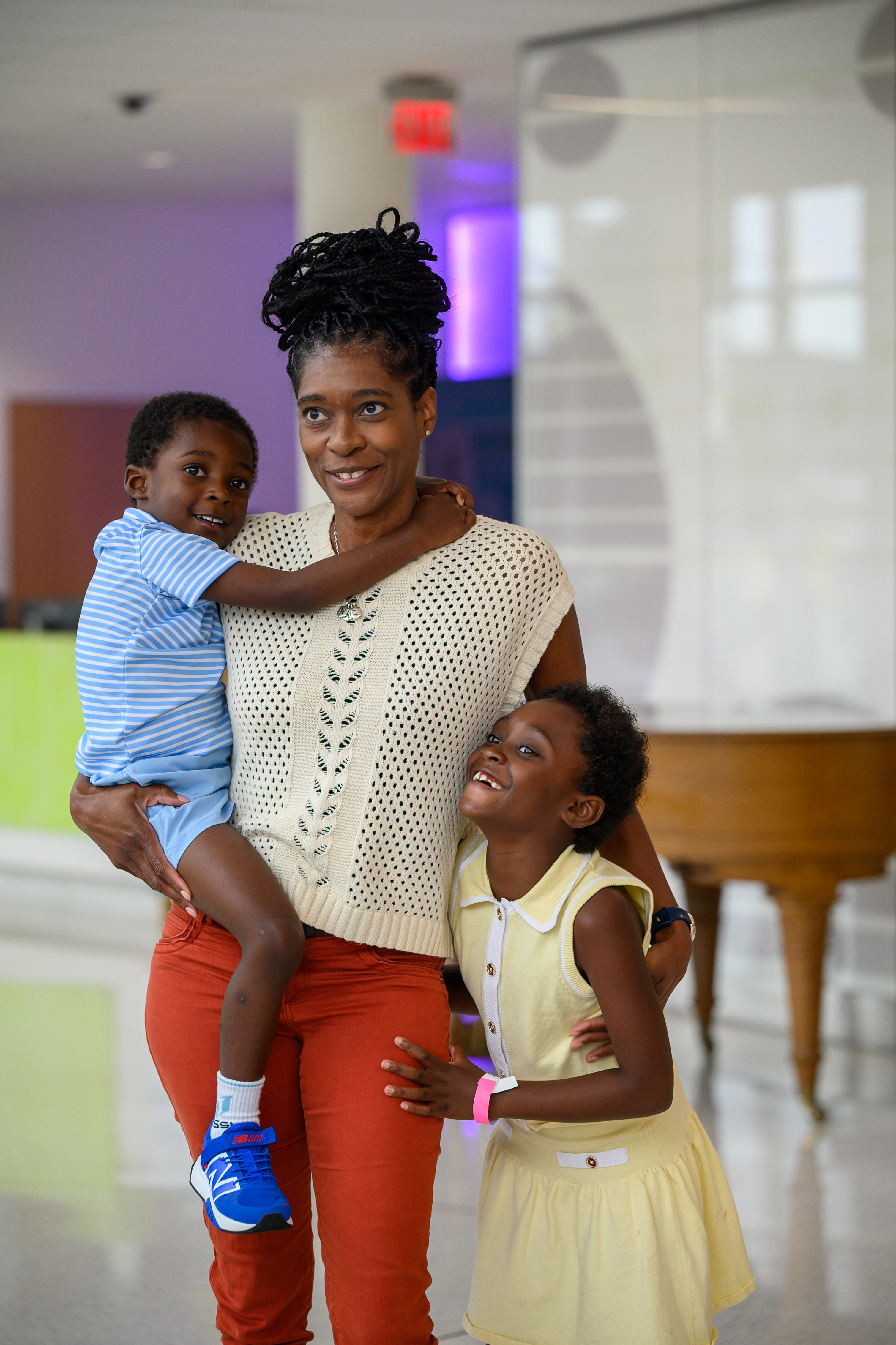
Violet stayed in the hospital for 18 days, where she received her first rounds of chemotherapy. During those early days, Rihanna and John took turns staying by her side around the clock—taking time off work and juggling care for their young son, Locke.
When they learned about the Blinatumomab (Blina) protocol—now considered a national standard of care for certain children with ALL and followed at leading pediatric cancer centers, including Manning Family Children’s—Rihanna said they were all in. “If we didn’t have the option for at-home treatment, of course we would have made it work,” she said. “But we would have had to take family leave and disrupt Locke’s schedule.”
Known to families as “Blina,” this innovative method of blood cancer treatment allows patients to receive multiple 28-day courses of around-the-clock chemotherapy without having to stay in the hospital.
At-home cancer treatment gave Violet the freedom to be a kid
 Treating childhood leukemia often involves long cycles of chemotherapy over a period of up to three years. Blina is a targeted immunotherapy that helps the patient’s own immune system recognize and attack leukemia cells.
As Lynn Winfield, MBA, BSN, RN, CPHON, NEA-BC, senior director of Patient Care Services at Manning Family Children’s, explained, the hospital implements this nationally recognized standard of care following clinical trial results demonstrating its effectiveness.
“Blinatumomab has become part of the standard approach for treating certain pediatric patients with ALL,” Winfield said. “Our focus has been on building a comprehensive training system for parents so they feel confident managing their child’s care at home. Patients start each cycle in the hospital for close monitoring, and if they tolerate the medication, they go home with a small backpack that holds the pump and medication bag. The pump connects to the chest port with a short line, allowing the child to walk, read, play, and rest at home rather than inside a hospital room.”
Patients return to the hospital twice a week, on set days and times, to have the medication bag changed and the infusion pump reset. Parents have access to a telephone support line 24-7 in case of issues with the infusion pump.
Violet tolerated the chemotherapy well, and Blina gave their family a sense of “freedom” once Violet was discharged from the hospital. Violet chose a bright pink backpack—nicknamed “Googly Girl”—to wear outside the house. The infusion pump fit neatly inside Googly Girl.
“Blina gave Violet the freedom to be a little girl. She was even able to go to the playground during her first 28 days of treatment,” Rihanna said. “And during her second Blina cycle, Violet started kindergarten.”
She chose a pink wig for when she began losing her hair, though she chose not to wear it at school—except on Crazy Hair Day.
Violet was the first patient at Manning Family Children’s to return to school while receiving Blina treatment. “Violet is such a rock star. Even when she lost her hair, she took it in stride. She started at a new school with a whole new group of kids,” Rihanna said.
“Here’s the most important thing: Because of Blina, she was able to be a normal kid, and that meant everything to our family.”
Winfield said she has heard similar feedback from many families. “Blina allows patients and their families to live more normal lives throughout treatment cycles. They aren’t stuck in the hospital during that time,” she explained.
Continuing Violet's care outside the hospital changed the rhythm of the whole family's life. Rihanna and John avoided extended leave from work, kept their son's routine steady, and Violet could even join her kindergarten class through daily video circle time before returning in person.
Just ahead: Violet’s bright future
After completing multiple 56-day courses of chemotherapy that required weekly oncology clinic visits, along with two interspersed 28-day cycles of Blina, Violet recently began maintenance therapy, which involves monthly outpatient infusions.
She still loves her friends, her books, and anything pink; none of that has changed. But at just six years old, she's faced cancer head-on. And as Rihanna emphasized, the Blina protocol did more than treat the disease.
“Blina gave Violet time—time at home, time with her brother, time in school, and time to be six,” Rihanna said. “For our family, following this standard of care for ALL treatment at Manning Family Children’s has offered a sense of freedom that can’t be explained in words. But we are enjoying that freedom to its fullest.”
###
September is Childhood Cancer Awareness Month. Each year, thousands of families across the country hear the words no parent is ready for—and behind every diagnosis is a child who still deserves the chance to simply be a kid. At Manning Family Children's, our nationally leading program provides advanced treatments for children with leukemia, lymphoma, sickle cell disease, hemophilia, and other childhood cancers and blood disorders. As the only accredited pediatric stem cell transplant program in Louisiana, our team performs advanced treatments including bone marrow transplants, CAR-T cell therapy, and newly approved gene therapy for treatment of sickle cell disease. Children's is also actively conducting cancer and blood disorders research at the forefront of medicine and has the largest, most experienced group of pediatric hematology oncology specialists in the region. Our team is dedicated to ensuring that patients across the Gulf South region have access to the most advanced and comprehensive therapies possible, right here at home—and always, regardless of ability to pay.
For information about the Center for Cancer and Blood Disorders at Manning Family Children's in New Orleans, visit https://www.manningchildrens.org/cancer.


