A second chance at life: Tiliyah’s stem cell transplant journey at Manning Family Children’s
- Category: Patient Stories, Hematology
- Posted on:

For most of her 21 years, Tiliyah Albert's life revolved around one thing: sickle cell disease. She built her work schedule around it, planned her classes around it and eventually put college on hold because of it. Today, just months after a stem cell transplant at Manning Family Children's, Tiliyah is looking toward a future the disease no longer gets to decide.
"Growing up with sickle cell was my normal"
Tiliyah was diagnosed with sickle cell disease before she was born. Both of her parents carry the sickle cell trait, which gave her a chance of inheriting the disease itself.
Sickle cell disease is a genetic blood disorder that causes red blood cells to become misshapen and rigid. Instead of moving smoothly through the blood vessels, these cells can get stuck and block blood flow, triggering severe pain, infections and organ damage over time.
"Growing up with sickle cell was my normal," Tiliyah said. She learned early how her body worked and how to take care of herself, and the people closest to her understood when a pain crisis struck. Through childhood, her symptoms were relatively manageable, usually leading to two or three hospital stays a year.
Puberty changed that. By age 18, Tiliyah's pain crises had become nearly constant.
"My life centered around my sickle cell rather than the other way around," she said. Every decision about work and school had to account for the next hospital visit. Eventually, balancing college, a job and frequent admissions for pain management became too much, and Tiliyah made the difficult choice to put her education on hold and focus on her health.
A multidisciplinary approach to advanced sickle cell care
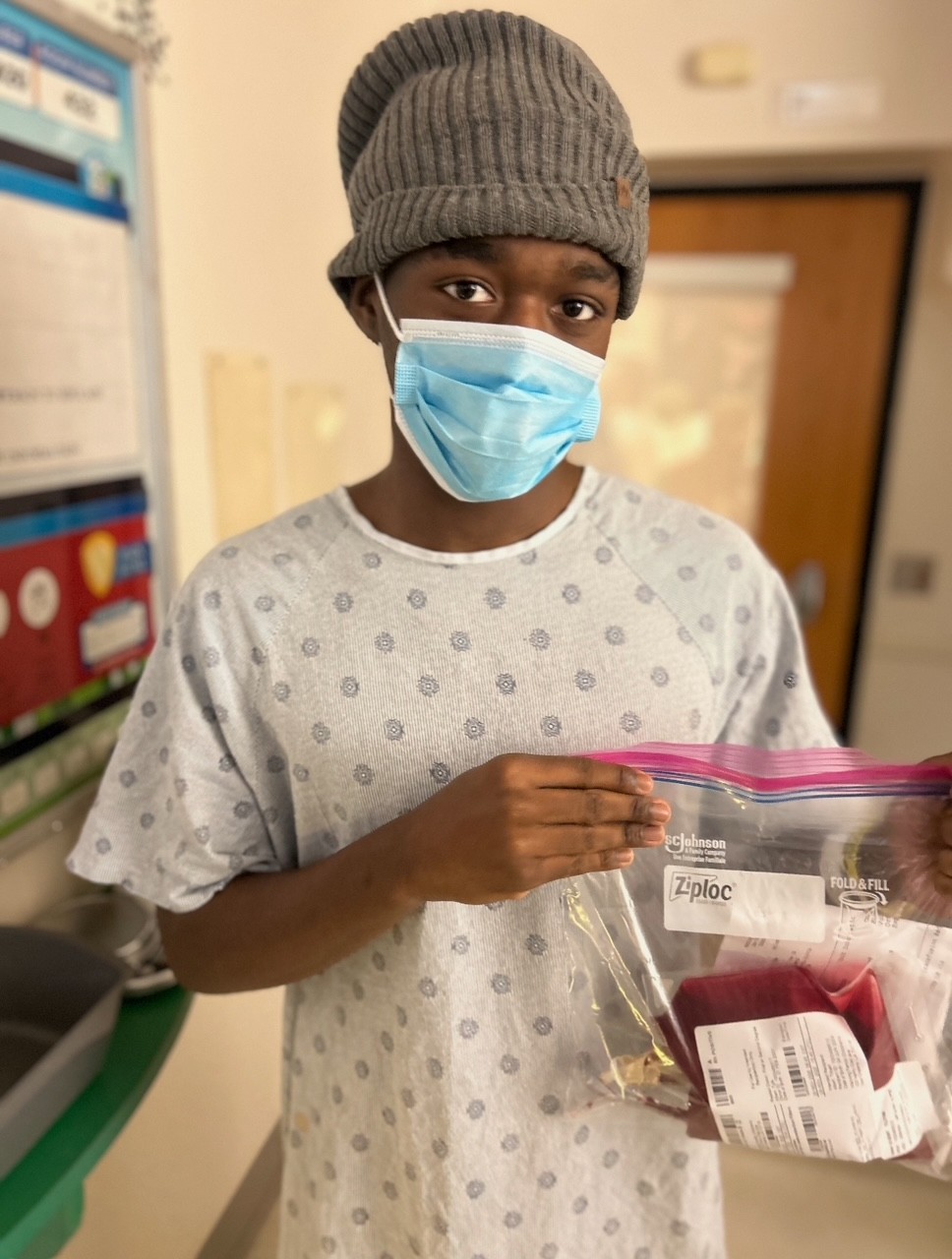 Tiliyah’s care was led by Dana LeBlanc, MD, a pediatric hematologist/oncologist and director of the Comprehensive Sickle Cell Disease Treatment Program (SCDTP) at Manning Family Children’s. The program provides ongoing, specialized care focused on managing symptoms, preventing complications and improving quality of life for patients across the region.
Dr. LeBlanc explored every available option to ease Tiliyah's pain, from medications to enrollment in a double-blind clinical trial for sickle cell pain. Unfortunately, the trial didn't bring relief. As Tiliyah's quality of life continued to decline, a new possibility entered the conversation: a stem cell transplant. Unfortunately, the trial did not provide relief.
As Tiliyah’s quality of life continued to decline, the possibility of a stem cell transplant entered the conversation.
Dr. LeBlanc turned to her colleagues on the Stem Cell Transplant Team at Manning Family Children’s to determine whether transplant could be right for Tiliyah.
That kind of partnership is a defining strength of blood disorder care at Children's. Rather than being evaluated by a single team, Tiliyah had two highly specialized programs working side by side: the SCDTP, which had cared for her for years, and the Stem Cell Transplant team, whose program is the only certified pediatric CAR-T cell therapy program in Louisiana and the state’s only FACT-accredited pediatric bone marrow transplant program. The designation reflects rigorous national standards for safety and outcomes, and it means families can access advanced transplant care without leaving the state.
Together, the two teams evaluated Tiliyah's case, coordinated next steps and built a path from long-term disease management to potentially curative treatment, without any disruption in her care.
For Tiliyah, just hearing the word "transplant" changed everything. "I was dreaming of a life without sickle cell," she said. "When they started talking about a stem cell transplant that could get rid of my sickle cell completely, I saw it as a second chance at life."
How a stem cell transplant works
A hematopoietic stem cell transplantation, often called a bone marrow transplant, replaces a patient's defective blood-forming stem cells with healthy ones from a donor. Because these stem cells are responsible for making blood, a successful transplant allows the body to produce healthy red blood cells. It doesn't change the DNA in the rest of the body, only in the blood system.
Before receiving new stem cells, patients must undergo chemotherapy and sometimes radiation to eliminate their existing blood cells. The donor stem cells are then infused through an IV, much like a blood transfusion. Over time, the donor cells take over blood production, and after a successful transplant for sickle cell disease, hemoglobin levels return to normal.
The transplant team emphasizes that a stem cell transplant is often the best, and sometimes the only, chance for a cure for blood-related diseases, including cancers like leukemia and conditions like sickle cell disease. More than 95% of pediatric sickle cell patients who undergo a stem cell transplant survive. Still, it's a demanding process that requires close monitoring by a highly specialized team, which is why every transplant journey at Manning Family Children's begins with extensive education so patients and families fully understand both the benefits and the risks.
“It was my brother or nobody.”
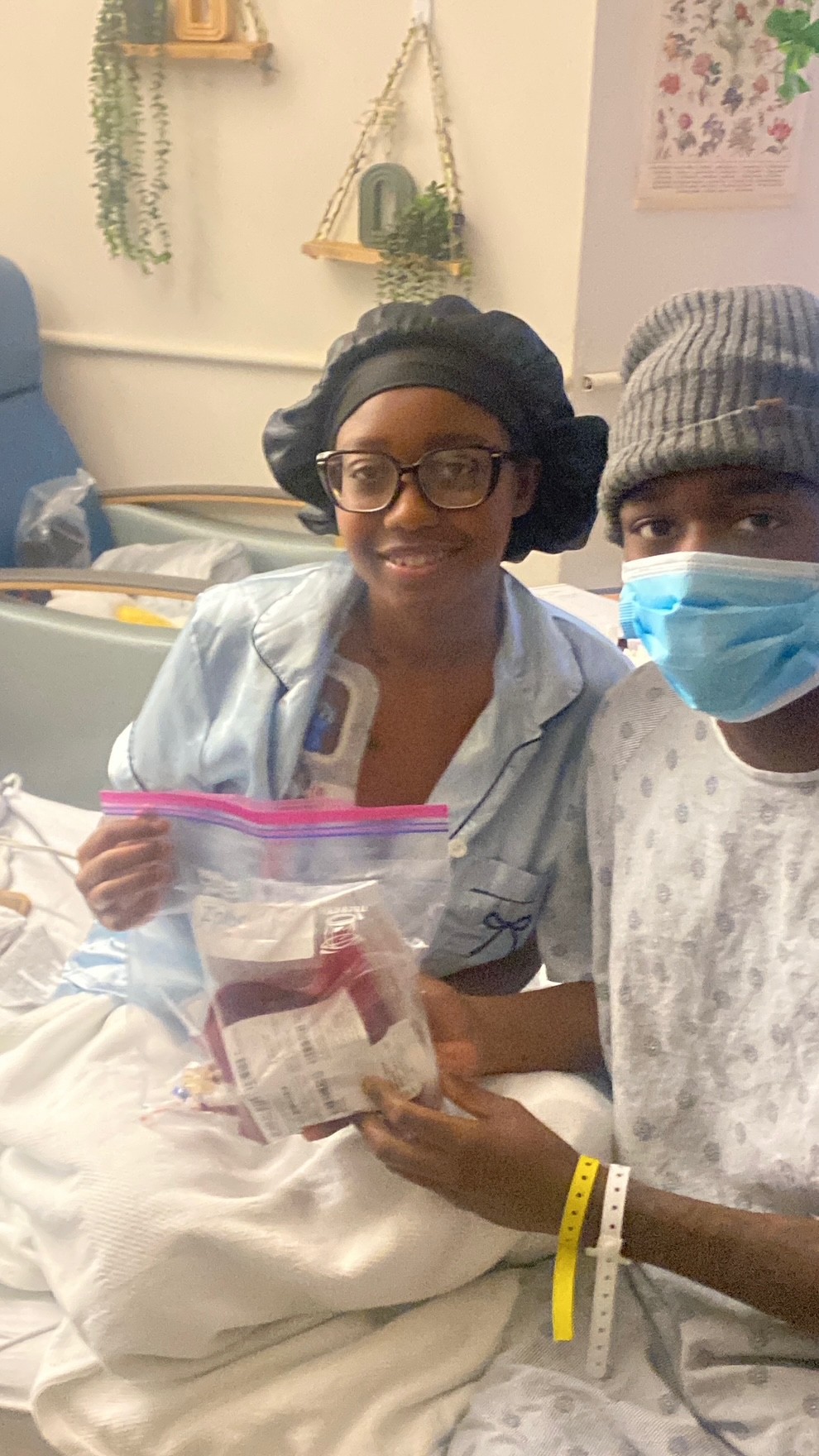 The next step was finding a donor. Fully matched donors can be hard to find on national registries, but Tiliyah had someone closer to home: her younger brother, Tylik, then 18, was a 50% match.
The transplant team walked Tiliyah through every potential risk of a half-matched transplant, including graft-versus-host disease, a complication in which donor cells attack the recipient's body. Given how severely sickle cell had affected her life, Tiliyah felt the risks were worth taking.
"For me, it was my brother or nobody," she said. "I was 110% on board from the start."
Getting ready for transplant took months. Tiliyah received repeated blood transfusions to strengthen her organs ahead of treatment. Thinking about her future, she also chose to have her eggs preserved before starting chemotherapy so she might still be able to have children someday.
Then came chemotherapy and radiation to clear out her own blood-forming cells. Tiliyah knew side effects were coming and took the almost immediate hair loss in stride.
On November 25, 2025, Tylik donated his bone marrow, and Tiliyah received her brother's stem cells that same day.
Tiliyah was discharged from Manning Family Children's on January 9, 2026. During the critical first 100 days after transplant, when the risk of infection is highest, she left home only for medical appointments.
Her patience paid off. Her bone marrow is now producing blood cells from her brother's donated stem cells, and her lab numbers remain strong.
"I'm 100% sickle cell free," she said.
A future without limits
Tiliyah plans to return to college when she feels ready, and she's savoring the chance to imagine a life on her own terms.
"I look forward to ordinary moments that once felt impossible, living without constant pain and choosing a future without limits set by disease," she said.
Through it all, Manning Family Children's has been her hospital for life. "From the clinic staff to the janitors, all the people I've met along the way have lifted my spirit on the worst of days," she said.
Her advice to others living with the disease is simple: "Anyone with sickle cell disease should see Dr. Dana LeBlanc and talk with the transplant team to find out if stem cell transplant could be an option. It has given me my life back."
About the Center for Cancer and Blood Disorders at Manning Family Children's
This National Sickle Cell Awareness Month, we're proud to share stories of strength from the children and families we're honored to care for. At Manning Family Children's, we don't make claims—we show proof. We are the first and only center in the Gulf South to offer FDA-approved gene therapy for sickle cell disease, and we are home to Louisiana's only FACT-accredited pediatric bone marrow transplant program. Our Center for Cancer and Blood Disorders is ranked No. 48 nationally in U.S. News & World Report's 2026–2027 Best Children's Hospitals rankings. We are also home to the largest, most experienced group of pediatric hematology oncology specialists in the region, bringing potentially life-changing therapies closer to home for families across the Gulf South.
For 70 years, we've found answers where others haven't even looked, so every child with Sickle Cell Disease can receive advanced, compassionate care right here at home, regardless of ability to pay.
Learn more about the Center for Cancer and Blood Disorders program here.


